.jpg)

For many confident solo riders, a 110–125cc semi-automatic is a practical choice for the Ha Giang Loop because it is lightweight, simple to control and suitable for riding with light luggage. Experienced manual riders may prefer a 150cc road bike or dual-sport, while travellers with little or no motorcycle experience should consider an Easy Rider instead.
The right choice depends on more than engine size. Your riding experience, passenger or luggage load, bike condition and the type of roads you expect to ride all affect which motorcycle is most suitable.
Quick Answer: Which Motorbike Is Best for You?
The best motorbike depends on your riding experience, load and comfort preference:
- 110–125cc semi-automatic: Best for confident solo riders who want a lightweight, simple and manageable motorcycle. The main limitation is less power under heavy loads.
- 150cc manual road bike: Best for experienced manual riders who want stronger climbing performance and direct control over the clutch and gears. It is less forgiving on rough surfaces.
- 150cc dual-sport: Best for experienced riders who prioritise suspension comfort, ground clearance and mixed road surfaces. It is taller and heavier than a typical semi-automatic.
- Automatic scooter: Best suited to short local rides rather than the full Ha Giang Loop. Easy to operate, but offers less direct control over gearing.
- Easy Rider: Best for beginners, travellers without sufficient motorcycle experience, or anyone who is not legally qualified to self-ride. An experienced local driver handles the motorcycle.
The key rule: choose the motorcycle you can control confidently, rather than simply choosing the largest engine.
A well-maintained 110cc motorcycle can be a better choice than a poorly maintained 150cc bike.
Automatic vs Semi-Automatic vs Manual Motorbikes
The transmission is one of the most important factors when choosing a Ha Giang Loop motorbike rental.
Semi-Automatic: Best All-Round Choice for Many Riders
Semi-automatic motorcycles such as the Honda Wave or Honda Blade use foot-operated gears without a conventional hand clutch.
They are lightweight, relatively easy to manoeuvre and still allow the rider to select lower gears for climbs and descents. This makes them a practical option for solo riders who already have basic motorcycle experience.
Best for: confident solo riders carrying light luggage.
Advantages:
- Lightweight and easy to manoeuvre
- Simple controls
- Direct gear selection
- Generally economical
- Suitable for many paved mountain sections
Limitations:
- Less reserve power under heavy loads
- Basic suspension can become tiring on rough roads
- Less suitable for carrying a passenger over long mountain days
150cc Manual: More Power for Experienced Riders
Manual motorcycles such as the Honda Winner X or Yamaha Exciter offer more power and direct control over the clutch and gears.
They can be a good choice for riders who already use manual motorcycles confidently, particularly when riding mainly on paved mountain roads.
Best for: experienced manual riders who want stronger climbing performance.
The trade-off is comfort. A road-oriented motorcycle may be less forgiving on rough surfaces than a dual-sport.
150cc Dual-Sport: Best for Mixed Road Surfaces
A 150cc-class dual-sport such as the Honda XR150 can be an excellent choice for experienced riders who prioritise comfort and control over several days.
Its upright riding position, higher ground clearance and longer-travel suspension can make uneven surfaces more manageable.
Best for: confident manual riders who expect mixed road conditions.
The main disadvantages are its taller seat, greater weight and requirement for confident manual-bike handling.
Automatic Scooter: Better for Local Riding
Automatic scooters are convenient and easy to operate, particularly around town. However, they are generally not the first choice for a multi-day Ha Giang Loop.
Many automatic scooters have smaller wheels and lower ground clearance than motorcycles commonly used for mountain riding. They also do not give the rider the same direct gear selection as a semi-automatic or manual motorcycle. These characteristics can be less suitable for repeated steep descents and inconsistent road surfaces.
Honda XR 190L: Premium Choice for Experienced Riders
The Honda XR 190L is one of the more powerful options available for Ha Giang motorbike rental. With its larger engine, higher ground clearance and long-travel suspension, it is suited to experienced riders looking for additional power and comfort on mountain roads.
Best for: experienced riders who want more power and suspension capability for a multi-day Ha Giang Loop.
Its larger size and taller seat also mean it is not necessarily the best choice for beginners or shorter riders.
Which Motorbike Should You Choose?
The best way to choose a Ha Giang motorcycle is to start with your riding experience and load, not the model name.
Solo Rider With Basic Motorcycle Experience
A 110–125cc semi-automatic is often the most balanced option if you already know how to ride but are not comfortable with a full manual motorcycle.
You should already be able to:
- Brake progressively
- Control speed downhill
- Maintain low-speed balance
- Handle tight corners
- Ride on wet or imperfect surfaces
A small motorcycle may require earlier downshifting and slower climbing, but its low weight can make it easier to control.
Experienced Manual Rider
If you regularly ride a manual motorcycle, a 150cc-class bike gives you more flexibility on climbs and descents.
Choose a road manual if you prioritise paved-road performance. Choose a dual-sport if suspension comfort and mixed surfaces matter more.
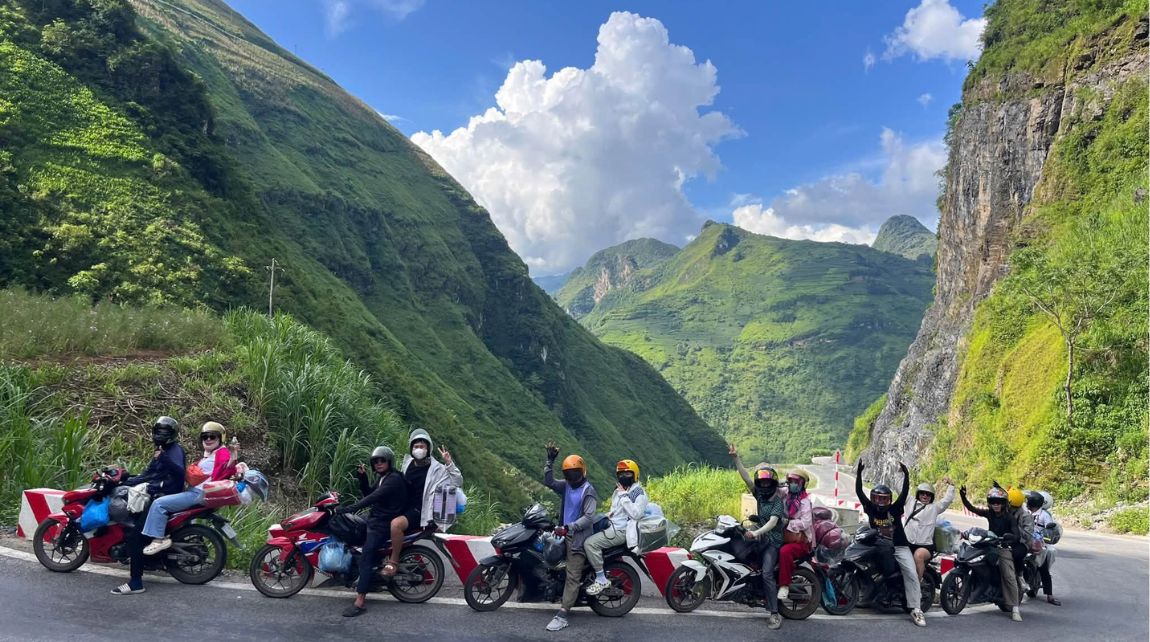
Riding With a Passenger
A passenger changes acceleration, braking, balance and suspension behaviour.
For two-up riding, consider:
- Combined rider and passenger weight
- Luggage
- Rear suspension condition
- Tyres and tyre pressure
- Engine performance
- Braking condition
- Passenger space
A small semi-automatic may physically carry two people, but that does not necessarily make it the most comfortable choice for several days of mountain riding.
If both travellers are inexperienced, an Easy Rider is a more appropriate option.
First-Time Motorcycle Rider
If you have never ridden a motorcycle, the Ha Giang Loop should not be your training ground.
The challenge is not simply operating the motorcycle. Riders need to manage braking, low-speed balance, steep descents, tight bends, changing road surfaces and traffic around blind corners.
This lets you experience the route without having to manage motorcycle control on unfamiliar mountain roads.
What Ha Giang Road Conditions Mean for Your Bike Choice
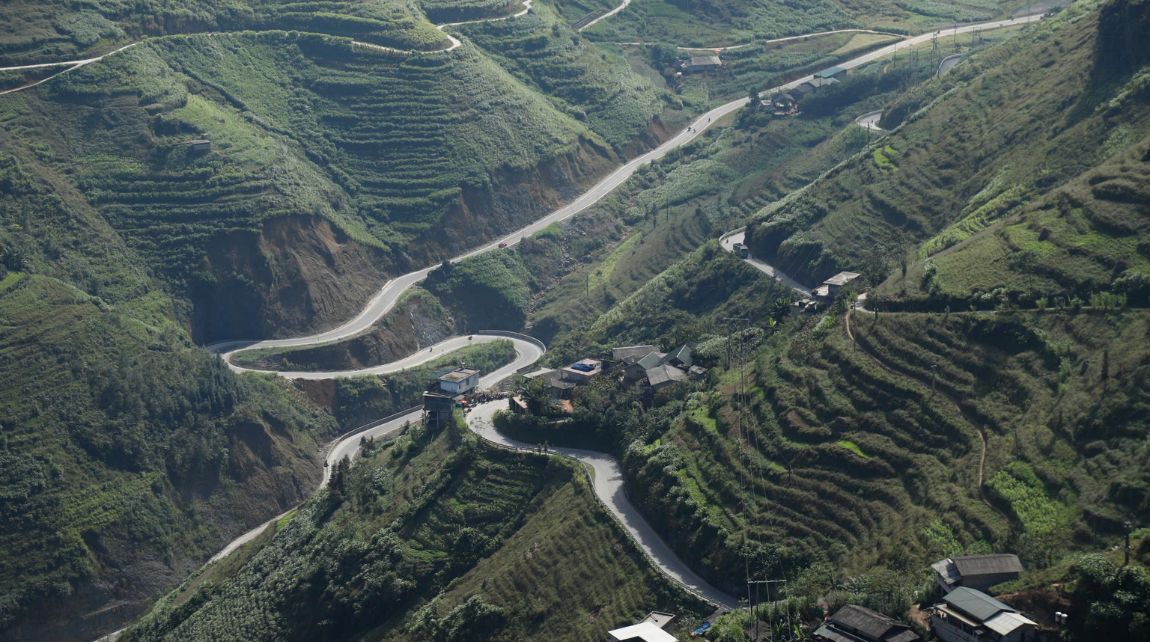
The Ha Giang Loop combines mountain climbs, descents, tight curves and changing road surfaces. Vietnam Tourism describes the route as a mountainous journey with repeated curves and advises riders to approach bends carefully and ride during daylight.
When choosing a bike for these conditions, pay particular attention to:
- Brakes: should feel firm, progressive and predictable.
- Tyres: adequate tread and good condition are more important than engine size when roads are wet or loose.
- Gearing: lower gears give riders more control on climbs and descents.
- Suspension: better suspension can improve comfort and control on potholes and uneven surfaces.
- Engine size matters, but it comes after rider skill and motorcycle condition. A 150cc motorcycle gives an experienced rider more reserve power, but a larger or taller bike is not automatically safer if the rider struggles to control it.
How to Choose the Right Ha Giang Motorbike Rental
A good Ha Giang motorbike rental provider should be evaluated on more than the advertised daily price.
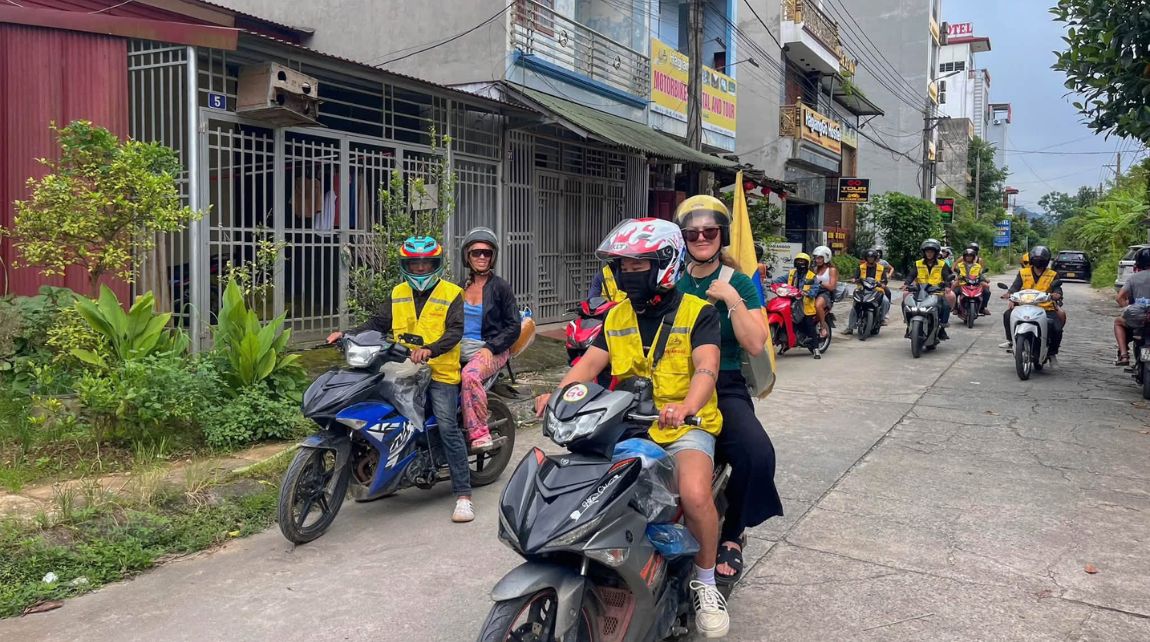
Before booking, check:
1. The Actual Motorcycle
Do not assume that a model shown in a booking photo represents every bike in the fleet.
Ask what motorcycle category you will receive and inspect the actual bike before departure.
2. Maintenance and Safety
Ask whether the motorcycle has been checked recently, particularly the:
- Brakes
- Tyres
- Chain
- Suspension
- Lights
A reliable, well-maintained motorcycle is more important than a larger engine.
3. Roadside Support
Find out what happens if the motorcycle develops a problem several hours from Ha Giang City.
Ask:
- Who should you contact?
- Is roadside support available?
- Who pays for local repairs?
- Can the bike be replaced if it becomes unsafe?
Clear support arrangements are particularly important on a multi-day mountain route.
4. Damage Terms
Do not assume that a rental product described as “insurance” covers every type of damage.
Before paying, understand what is included and excluded, including any deposit, excess, repair costs, towing or damage to tyres and mirrors.
5. What Is Included
Compare the complete rental package rather than the headline price.
Check whether the rental includes:
- Helmet
- Luggage rack or straps
- Rain gear
- Damage protection
- Roadside assistance
- Deposit requirements
- Fuel and return conditions
Rental prices can vary by motorcycle, duration, season, condition and included services, so a fixed “typical price” is not necessarily meaningful.
How Much Does It Cost to Rent a Motorbike in Ha Giang?
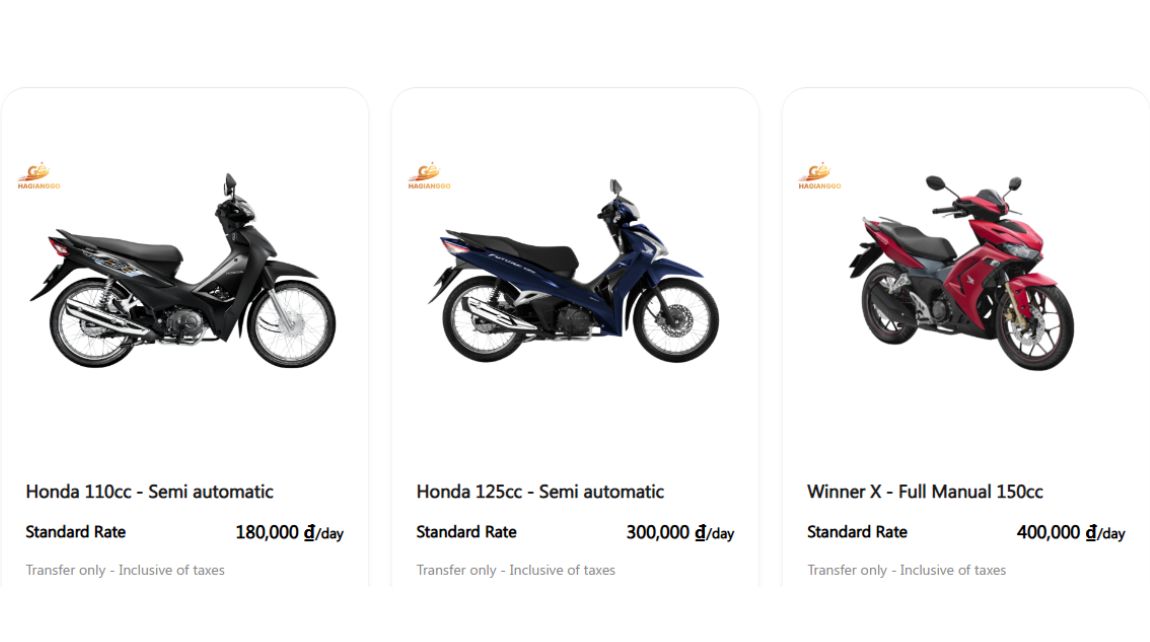
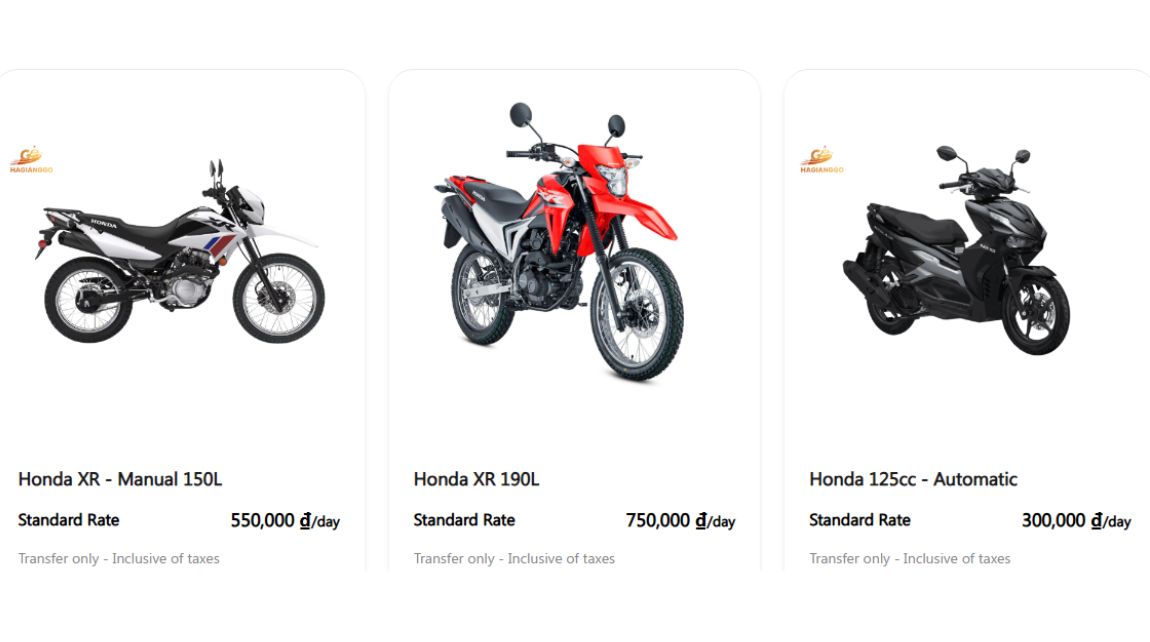
HagiangGo currently lists motorbike rental rates from 180,000 VND to 750,000 VND per day, depending on the motorcycle type. The current standard rates are:
- Honda 110cc Semi-Automatic: 180,000 VND/day
- Honda 125cc Semi-Automatic: 300,000 VND/day
- Honda 125cc Automatic: 300,000 VND/day
- Winner X Full Manual 150cc: 400,000 VND/day
- Honda XR Manual 150L: 550,000 VND/day
- Honda XR 190L: 750,000 VND/day
The 110cc semi-automatic is the lowest-priced option, while the XR models are positioned at the higher end of HagiangGo's current rental range. Prices shown on the rental page are standard daily rates and are listed as inclusive of taxes.
The best-value option depends on your riding experience rather than price alone. A 110-125cc semi-automatic may be sufficient for a confident solo rider with light luggage, while experienced manual riders may prefer the additional power and suspension characteristics of the 150cc or 190cc models.
Prices can change, so check HagiangGo's current rental service before booking.
How to Rent a Motorbike in Ha Giang
If you are searching for how to rent a motorbike in Ha Giang, the process is straightforward:
Step 1: Check your licence
Foreign travellers should confirm that they are legally entitled to ride the motorcycle category they plan to rent.
Foreign travellers should make sure their driving documents meet Vietnamese requirements for the motorcycle category they plan to ride. For eligible foreign licences, Vietnam recognises a qualifying International Driving Permit (IDP) issued under the 1968 Vienna Convention when carried together with the corresponding national driving licence. The documents must cover the appropriate vehicle category. Check the requirements that apply to your specific licence and country before riding.
A driving licence and travel insurance are separate issues. Check whether your insurance covers motorcycle riding in Vietnam and whether it imposes conditions relating to licence type, engine size or protective equipment.
Step 2: Choose the right motorcycle
Match the motorcycle to your existing riding ability, passenger load and preferred comfort.
Step 3: Compare rental terms
Look beyond the daily price and check support, damage terms, deposits and included equipment.
Step 4: Inspect the bike
Check the motorcycle carefully before accepting it.
Step 5: Document existing damage
Take photos or a short video of the motorcycle before departure, including visible scratches and damage.
Step 6: Take a test ride
Test the brakes, steering, throttle and gears. On a manual motorcycle, check clutch operation as well.
If something does not feel right, fix the problem or request another motorcycle before beginning the Loop.
Ha Giang Motorbike Rental Inspection Checklist
Before leaving the rental shop, check:
- Brakes: firm and predictable
- Tyres: adequate tread, no major cuts, cracks or bulges
- Wheels: no obvious damage
- Chain: not excessively loose, dry or damaged
- Suspension: no obvious fork-oil leakage
- Throttle: smooth and returns normally
- Clutch: predictable operation on manual bikes
- Lights: low beam, high beam, indicators and brake light
- Horn: working
- Mirrors: secure and usable
- Fuel: starting level confirmed
- Documents: required rental and vehicle documents confirmed
- Existing damage: photographed before departure
A short test ride is particularly valuable because some problems are difficult to identify while the motorcycle is stationary.
FAQ About Ha Giang Motorbike Rental
What is the best motorbike for the Ha Giang Loop?
For many confident solo riders, a 110-125cc semi-automatic offers the best balance of low weight, simple controls and adequate performance. Experienced manual riders may prefer a 150cc road bike or dual-sport. The best motorcycle is ultimately the one you can control confidently and that is in good mechanical condition.
Is 110cc enough for the Ha Giang Loop?
A well-maintained 110cc-class semi-automatic can be enough for a solo rider with light luggage. It will have less reserve power on steep climbs than a larger motorcycle, particularly with additional weight. Rider ability, load, road conditions and bike condition all affect performance.
Is the Honda XR150 good for the Ha Giang Loop?
Yes, the XR150 is a strong option for experienced manual riders. Its upright position, ground clearance and suspension suit mixed road surfaces. However, its taller seat and manual transmission may make it less suitable for shorter or inexperienced riders.
Is an automatic scooter suitable for the Ha Giang Loop?
An automatic scooter can travel on mountain roads, but it is generally not the preferred option for the full Loop. Semi-automatic and manual motorcycles provide more direct control over gearing, which can be useful on repeated climbs and descents.
Can beginners ride the Ha Giang Loop?
Travellers with meaningful motorcycle experience may be able to ride cautiously even if they are new to Ha Giang. However, someone with no motorcycle experience should not use the Loop as a place to learn. An Easy Rider is a more suitable option for true beginners.
How do I find the best motorbike rental in Ha Giang?
Compare the condition of the actual motorcycle, rental terms, damage policy and roadside support rather than choosing solely on price. A reliable bike with good brakes and tyres is more important than a larger engine or a cheaper advertised rate.
What licence do foreigners need to ride in Ha Giang?
For eligible foreign licences, a qualifying International Driving Permit (IDP) issued under the 1968 Vienna Convention is recognised when used together with the corresponding national driving licence, and the documents must cover the appropriate motorcycle category. Requirements can vary depending on the licence and issuing country, so check your specific situation before riding.
Final Recommendation
The best motorbike for the Ha Giang Loop depends on your riding experience and travel needs. For most confident solo riders, a 110–125cc semi-automatic is a practical choice, while experienced manual riders may prefer a 150cc road bike or dual-sport.
Whichever you choose, prioritise control, bike condition, safety and reliable rental support over engine size or price. If you are not experienced or legally qualified to self-ride, an Easy Rider is the better way to experience the Loop.
If you're looking for a Ha Giang motorbike rental, start by choosing a motorcycle that matches your riding ability rather than simply choosing the most powerful option.