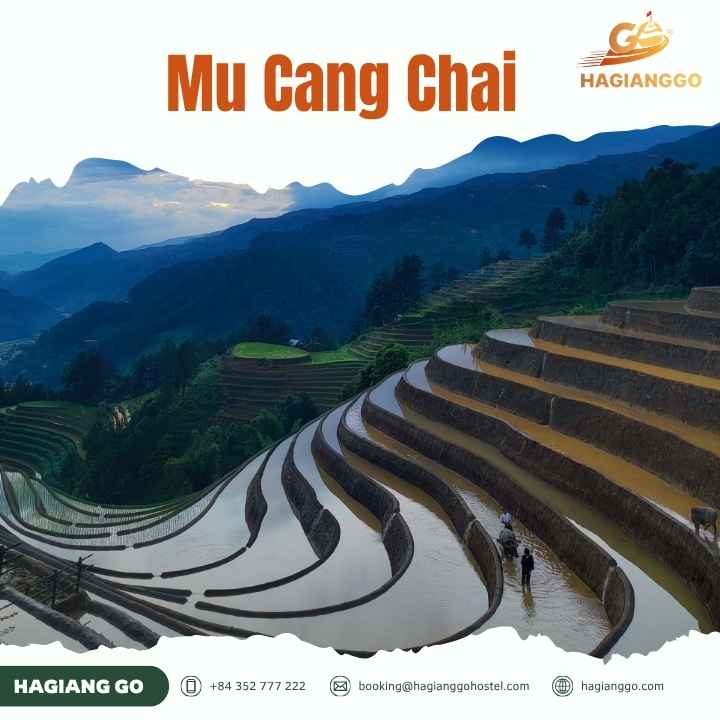

Mu Cang Chai is one of northern Vietnam’s best destinations for rice terraces, mountain scenery and slow travel. The region is especially famous for two seasons: May to June, when water-filled terraces reflect the sky, and September to October, when the rice turns gold before harvest.
Located roughly 300 km northwest of Hanoi, Mu Cang Chai is best experienced over two to three days. Most visitors come for the terraces, but Khau Pha Pass, Hmong villages, trekking routes, local food and seasonal paragliding make the area worth exploring beyond its most photographed viewpoints.
Mu Cang Chai at a Glance
- Location: Northwestern Vietnam, now within Lao Cai Province
- Distance from Hanoi: About 300 km
- Recommended stay: 2–3 days
- Known for: Rice terraces, mountain passes and Hmong culture
- Best for golden rice: September–October
- Best for water-filled terraces: May–June
- Main scenic areas: La Pan Tan, Che Cu Nha and De Xu Phinh
- Popular viewpoints: Mam Xoi Hill and Mong Ngua Hill
- Main access road: National Highway 32
Since the 2025 administrative reorganization, the former Yen Bai and Lao Cai provinces have been combined into the new Lao Cai Province. Mu Cang Chai is now officially a commune, although travelers and tourism businesses still commonly use “Mu Cang Chai” for the wider terrace region that previously formed Mu Cang Chai District.
Why Is Mu Cang Chai Famous?
Mu Cang Cha Vietnami is best known for thousands of hectares of terraced rice fields carved into steep mountain slopes by generations of Hmong farmers. Vietnam’s official tourism platform describes more than 2,000 hectares of terraces across the area, while government sources identify about 2,200 hectares associated with the Mu Cang Chai landscape.
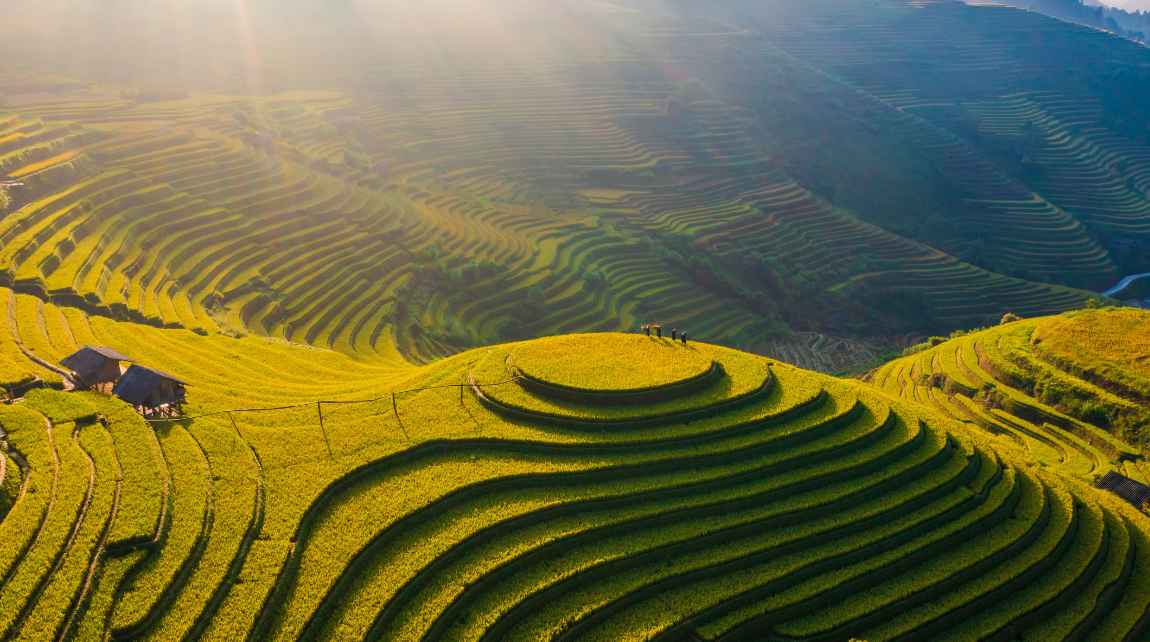
The most significant terraces are concentrated around La Pan Tan, Che Cu Nha and De Xu Phinh. Around 500 hectares in these areas received national heritage recognition in 2007, and the Mu Cang Chai terraced fields were later recognized as a Special National Relic in 2020.
What makes the Mu Cang Chai rice terraces particularly interesting is that they are not simply viewpoints created for tourism. They remain part of an active agricultural landscape where local communities continue to grow and harvest rice.
When Is the Best Time to Visit Mu Cang Chai?
The two best periods are May–June for the water-pouring season and September–October for the golden rice season. The experience is very different in each period.
May to June: Water-Pouring Season
During the water-pouring season, farmers channel water into the terraces before planting rice. The fields become reflective pools layered across the hillsides, creating one of the most distinctive landscapes in Mu Cang Chai.
This period is particularly suitable for:
- Landscape photography
- Green mountain scenery
- Travelers who prefer fewer harvest-season crowds
- Seeing the agricultural cycle before rice planting
September to October: Golden Rice Season
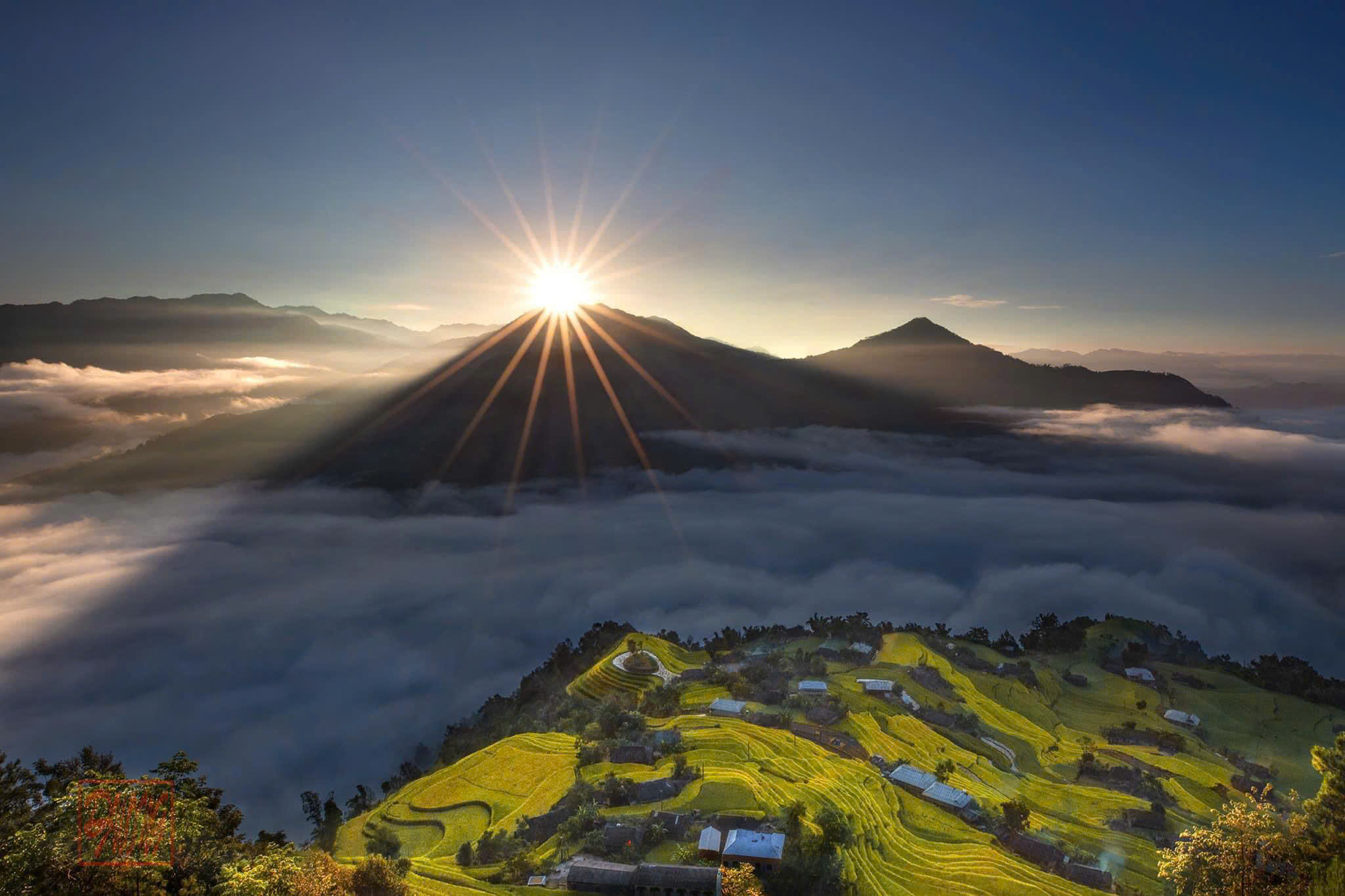
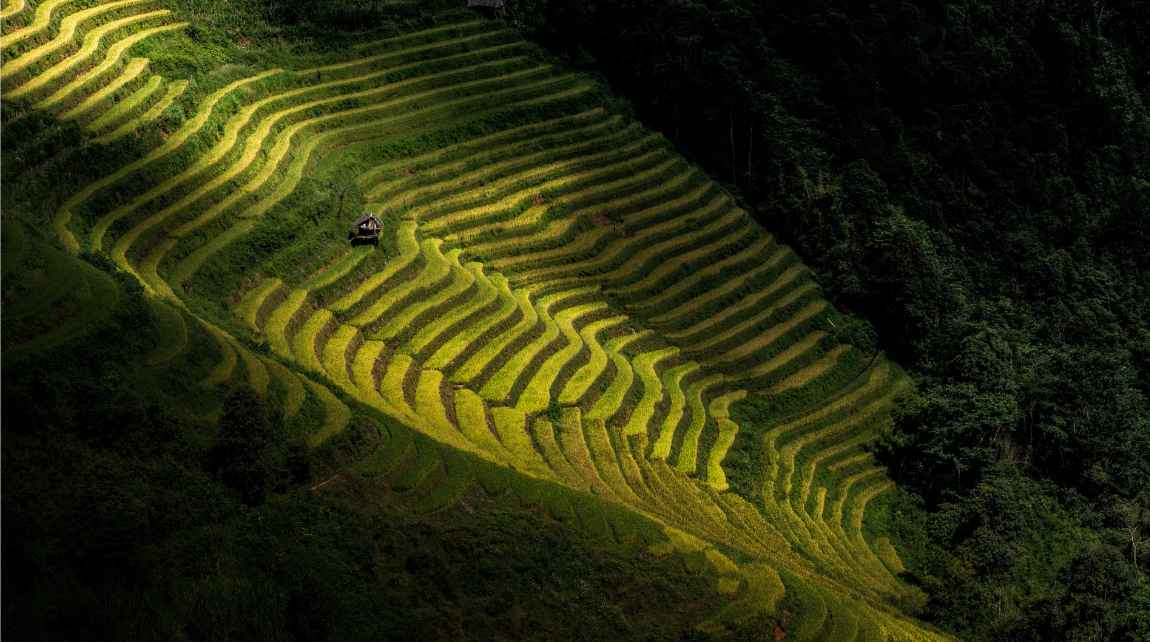
September to October is the most popular period to visit the Mu Cang Chai rice terraces. As the crop matures, hillsides change from green to yellow and deep gold before farmers begin harvesting.
This is the best period for:
- Iconic golden terrace views
- Photography
- Harvest activity
- Seasonal cultural and outdoor events
The exact harvest date varies each year with weather and planting conditions. If rice photography is your main reason for visiting, check local conditions shortly before departure rather than relying only on fixed calendar dates.
What About the Rest of the Year?
Mu Cang Chai remains visitable outside the two peak seasons. Winter offers quieter landscapes and mist, while spring gradually brings fresh vegetation back to the terraces. However, travelers whose main goal is the classic rice-field scenery should prioritize May–June or September–October.
Best Places to See the Mu Cang Chai Rice Terraces
1. La Pan Tan
La Pan Tan is one of the core terrace areas and one of the most important places to include on a first trip to Mu Cang Chai. Together with Che Cu Nha and De Xu Phinh, it forms part of the protected rice-terrace landscape recognized for its cultural and scenic value.
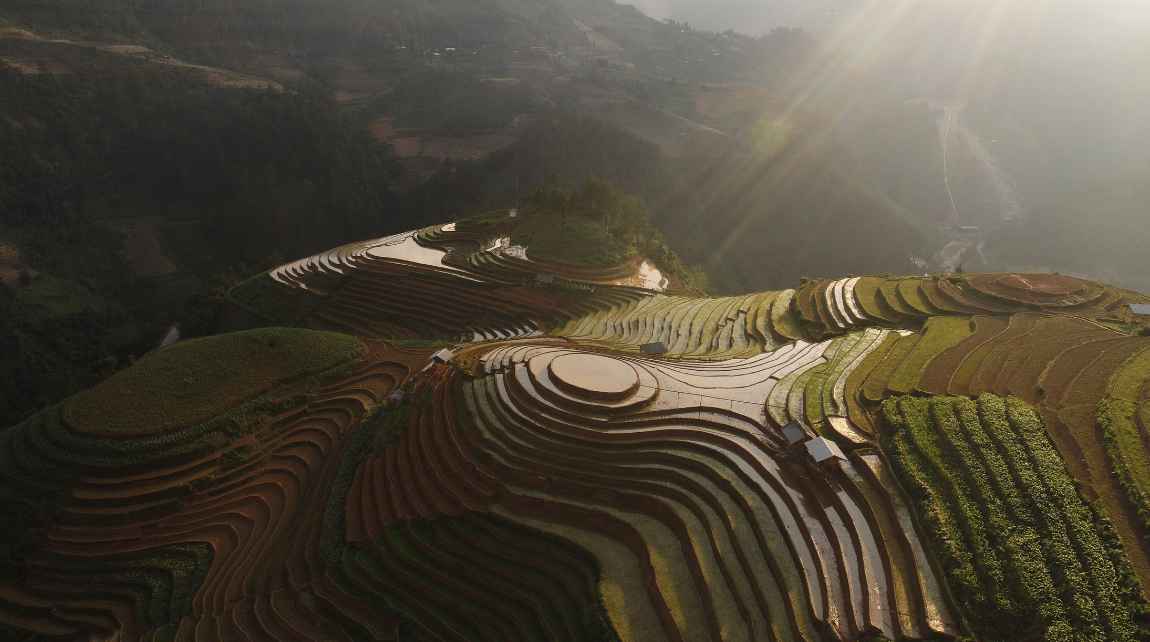
The area is particularly strong for:
- Wide terrace panoramas
- Village walks
- Sunrise and late-afternoon photography
- Access to Mam Xoi Hill
2. Mam Xoi Hill
Mam Xoi Hill, or Raspberry Hill, is one of the most recognizable viewpoints in Mu Cang Chai. Its rounded hill is wrapped in concentric rice terraces, creating the landscape that appears in many of the region’s best-known photographs.
The final access road can be steep and difficult, particularly after rain. Travelers who are not confident riding on mountain tracks can use a local motorbike driver for the final section.
3. Mong Ngua Hill
Mong Ngua, or Horseshoe Hill, is known for curved terraces that form semicircular patterns across the slope. It is close to the central Mu Cang Chai area and offers a different composition from Mam Xoi Hill, making it especially popular with photographers during harvest season.
4. Che Cu Nha and De Xu Phinh
Che Cu Nha and De Xu Phinh are less about a single famous lookout and more about exploring the wider agricultural landscape. Together with La Pan Tan, these areas contain the most historically significant sections of the Mu Cang Chai terraces.
Allow time for short walks rather than viewing everything from the road. The terrain gives a much better sense of scale when experienced on foot.
5. Khau Pha Pass
Khau Pha Pass sits on the approach to Mu Cang Chai and rises above the valleys around Tu Le and Lim Mong. The pass reaches more than 1,200 meters and is one of the region’s most impressive road viewpoints.\
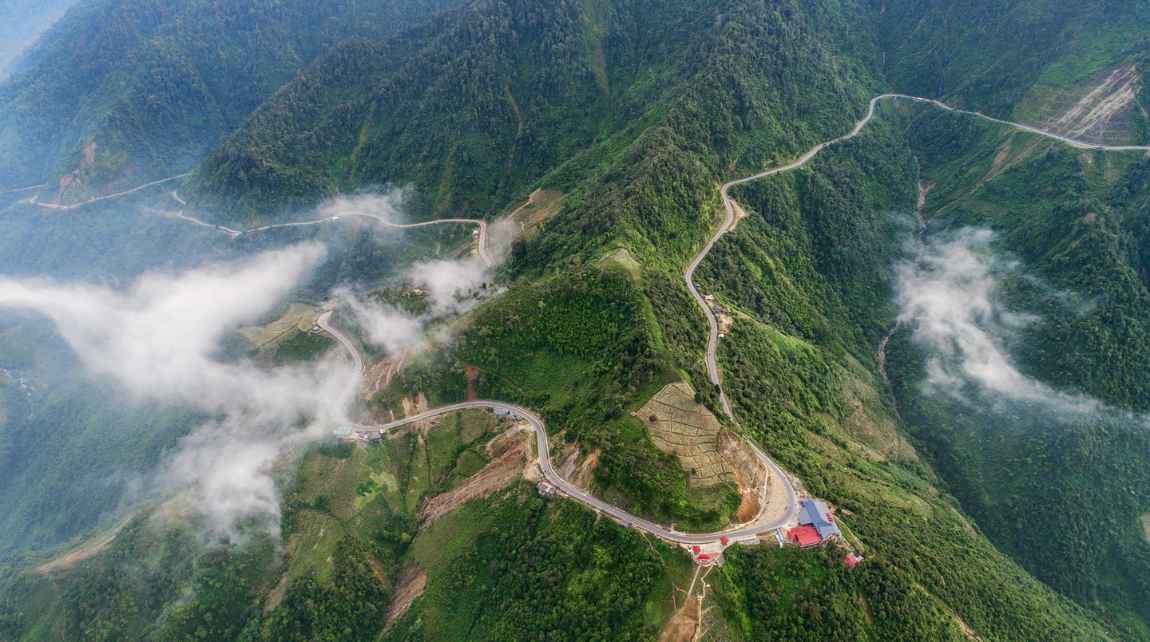
During rice season, the combination of mountain roads and terrace views makes Khau Pha a worthwhile stop even for travelers who are not riding independently.
Seasonal paragliding events are also held around the Khau Pha–Tu Le area, including water-season and golden-season programs. Dates vary each year and depend on weather.
6. Tu Le
Tu Le lies on the route between Nghia Lo and Mu Cang Chai and works well as either a stop or an overnight base. The area is known for rice fields and nep tan, a fragrant local sticky-rice variety.
Staying in Tu Le can also make sense for travelers looking for more accommodation choices while still having convenient access to Khau Pha Pass and Mu Cang Chai.
What Else Can You Do in Mu Cang Chai?
Trek Through the Rice Terraces
Walking is one of the best ways to understand the scale of Mu Cang Chai’s landscape.
Routes around La Pan Tan and nearby communities pass through cultivated hillsides, local roads and village paths. Conditions vary with rain, so shoes with good grip are preferable even for relatively short walks.
For longer or less obvious routes, hiring a local guide helps with navigation and avoids accidentally walking through crops or private land.
Explore Local Villages
Mu Cang Chai is strongly associated with Hmong communities, whose farming practices created much of the terrace landscape visitors see today. Government sources report that Hmong residents historically accounted for more than 90% of the population in the former Mu Cang Chai district.
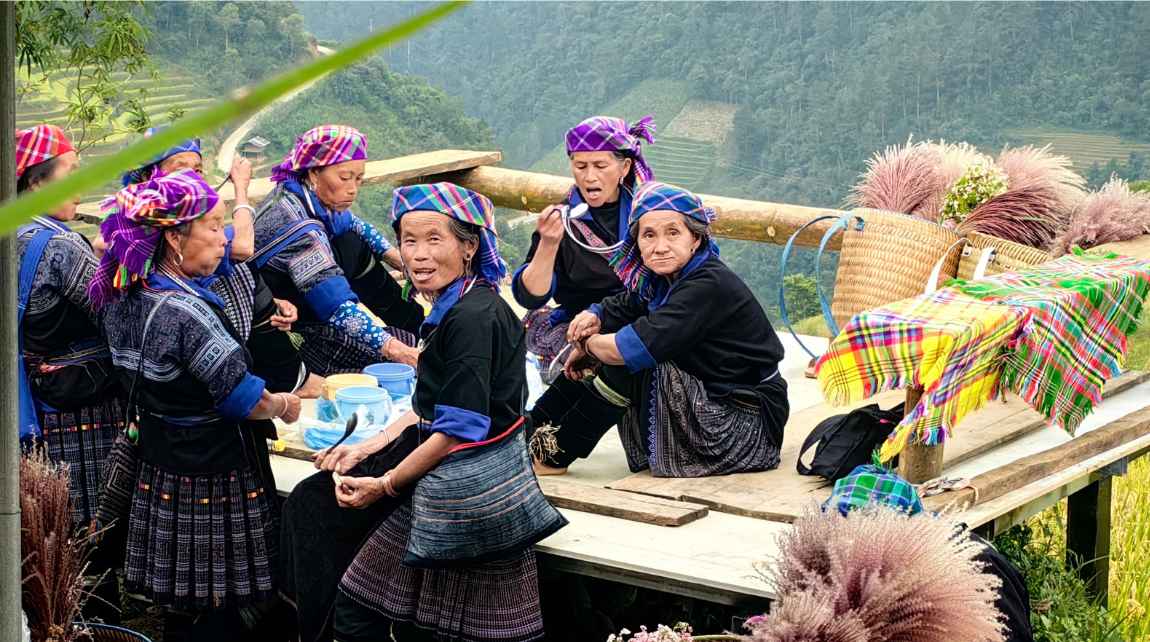
When visiting villages:
- Ask before photographing people
- Do not enter homes unless invited
- Avoid walking through planted fields
- Buy locally produced food or handicrafts when appropriate
- Do not treat residents or traditional clothing as tourist props
Visit a Bamboo Forest
Bamboo forests around the wider Mu Cang Chai area offer a change from the open rice terraces. Some access roads are steep, rough or muddy, particularly after rain, so local transport may be more practical than attempting the route on an unfamiliar motorbike.
How to Get to Mu Cang Chai from Hanoi
Mu Cang Chai is approximately 300 km from Hanoi. National Highway 32 is the main road connecting the capital with Nghia Lo, Tu Le, Khau Pha Pass and Mu Cang Chai.
By Bus
Public buses and sleeper buses are the most practical budget option for travelers who do not want to drive.
Services from Hanoi generally travel toward Nghia Lo and Mu Cang Chai, although schedules, vehicle types and pickup locations change. Confirm the latest departure and arrival information before booking.
By Private Car
A private car is more comfortable for couples, families and small groups.
The journey through Highway 32 includes winding mountain sections around Tu Le and Khau Pha. Travel time depends heavily on traffic, rest stops and weather, so treat map estimates as approximate rather than fixed.
By Motorbike
Experienced motorcyclists may travel from Hanoi along Highway 32, but the trip involves long distances, steep mountain roads and changing visibility.

Travelers considering self-riding should verify Vietnamese driving-licence requirements and their travel-insurance conditions before departure. Mountain-road experience matters more here than simple familiarity with scooters.
How Many Days Do You Need in Mu Cang Chai?
Two days is enough for the main viewpoints, while three days is better for a first visit. Oxalis also recommends roughly two to three days for experiencing the terraces, villages and other activities without rushing.
2 Days: Best for limited time
A two-day trip works when your priority is the rice terraces.
Day 1
- Travel from Hanoi
- Stop in Tu Le
- Cross Khau Pha Pass
- Explore a nearby terrace area
- Overnight in Mu Cang Chai
Day 2
- Mam Xoi Hill
- La Pan Tan
- Mong Ngua Hill
- Return toward Hanoi
The disadvantage is the long return journey.
3 Days: Best for first-time visitors
Three days provides a better balance between travel time and sightseeing.
Day 1: Hanoi → Nghia Lo → Tu Le → Mu Cang Chai
Take the scenic route northwest, stop around Tu Le and Khau Pha Pass, then stay overnight near Mu Cang Chai.
Day 2: Mu Cang Chai Rice Terraces
Spend the day around La Pan Tan, Mam Xoi Hill, Che Cu Nha or De Xu Phinh. Add a village walk or short trek instead of trying to cover every viewpoint.
Day 3: Mong Ngua Hill → Hanoi
Visit a final viewpoint in the morning before beginning the return journey.
Where to Stay in Mu Cang Chai
Accommodation in Mu Cang Chai now ranges from simple family homestays to ecolodges and higher-end resorts. A 2026 Lao Cai provincial tourism update confirms that the area now also includes luxury accommodation such as Garrya Mu Cang Chai.
Homestays
Best for:
- Backpackers
- Solo travelers
- Cultural immersion
- Budget-conscious visitors
Expect relatively simple rooms and, in some properties, shared bathrooms or communal sleeping spaces.
Ecolodges
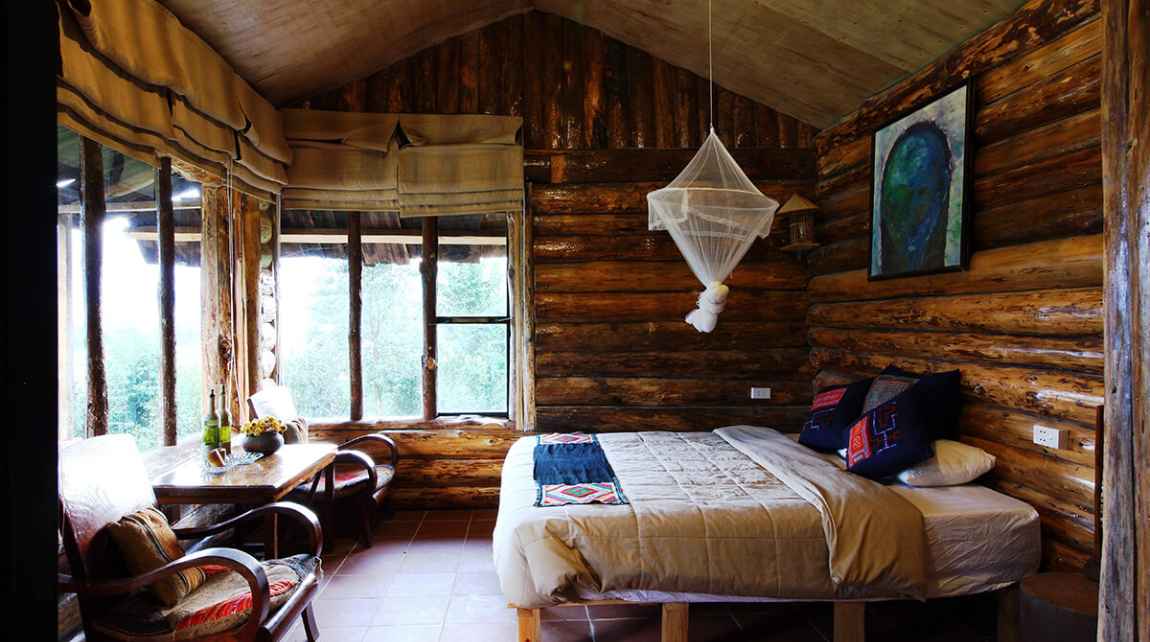
Best for:
- Couples
- Travelers wanting more privacy
- Terrace or mountain views
- A balance between comfort and rural atmosphere
What to Eat in Mu Cang Chai
Food in the Mu Cang Chai area reflects the agricultural landscape and cuisines of northwestern communities.
Look for:
- Tu Le sticky rice: Fragrant glutinous rice grown around Tu Le
- Com: Young green rice prepared during harvest season
- Grilled pork or hill chicken: Often seasoned with highland herbs and spices
- Grilled stream fish: Common in mountain areas
- Bamboo-tube rice: Sticky rice cooked inside bamboo
Local menus vary by season and village, so homestays are often a good place to try dishes prepared with locally grown ingredients.
What to Pack for Mu Cang Chai
Bring:
- Comfortable walking shoes
- Lightweight rain jacket
- Warm layer for mornings and evenings
- Sun protection
- Small backpack
- Refillable water bottle
- Power bank
- Insect repellent
- Personal medication
- Cash in Vietnamese dong
- Waterproof protection for electronics
Cash remains useful in rural areas where card payments may not always be available.
Practical Tips for Visiting Mu Cang Chai
- Start Early: Morning light is better for photography and major viewpoints become busier later during the golden season.
- Do Not Plan by Distance Alone: Mountain roads are slow. A relatively short section can take much longer than expected because of curves, fog, roadworks or rain.
- Check Rice Conditions Before Traveling: The exact timing of planting and harvest changes each year. For a photography-focused trip, confirm local conditions shortly before leaving Hanoi.
- Avoid Mountain Roads After Dark: Sections around Khau Pha and smaller access roads can have limited lighting, fog and difficult surfaces. Oxalis specifically notes reduced visibility and landslide risks during poor weather.
- Respect the Rice Fields: The terraces are working farmland and an important cultural landscape, not simply a photo location. Stay on established paths and ask before entering fields or photographing farmers.
Frequently Asked Questions About Mu Cang Chai
1. Where is Mu Cang Chai in Vietnam?
Mu Cang Chai is in northwestern Vietnam, about 300 km from Hanoi. Following Vietnam’s 2025 administrative reorganization, the area is now part of Lao Cai Province.
2. What is Mu Cang Chai famous for?
Mu Cang Chai is famous for terraced rice fields created and cultivated by generations of Hmong farmers. Around 500 hectares in La Pan Tan, Che Cu Nha and De Xu Phinh form the nationally recognized core of the terrace landscape.
3. What is the best month to visit Mu Cang Chai?
September and early October are usually the most popular for golden rice. May and June are best for reflective water-filled terraces before and during planting.
4. How many days should I spend in Mu Cang Chai?
Two days covers the major viewpoints, but three days is more comfortable because Mu Cang Chai is around 300 km from Hanoi and mountain-road travel takes time.
5. Can I visit Mu Cang Chai without a motorbike?
Yes. You can travel from Hanoi by bus or private car and use local transport around the main viewpoints. A motorbike is useful but not essential.
6. Is Mu Cang Chai better than Sapa for rice terraces?
Both are strong rice-terrace destinations, but they provide different experiences. Mu Cang Chai is particularly focused on extensive agricultural terraces and rural road travel, while Sapa has a larger tourism infrastructure and more developed town center. Vietnam’s official tourism site lists both among the country’s leading rice-terrace regions.
Final Planning Advice
For a first trip to Mu Cang Chai Vietnam, plan around the landscape rather than trying to visit every attraction.
Choose May–June for the water-pouring season or September–October for golden terraces. Stay for two nights if possible, concentrate on La Pan Tan and one or two additional viewpoints, and leave enough time for Khau Pha Pass and the journey from Hanoi.
The best Mu Cang Chai trip is not the one with the most stops. It is the one that gives you enough time to walk through the terraces, understand the landscape and experience the region without rushing.