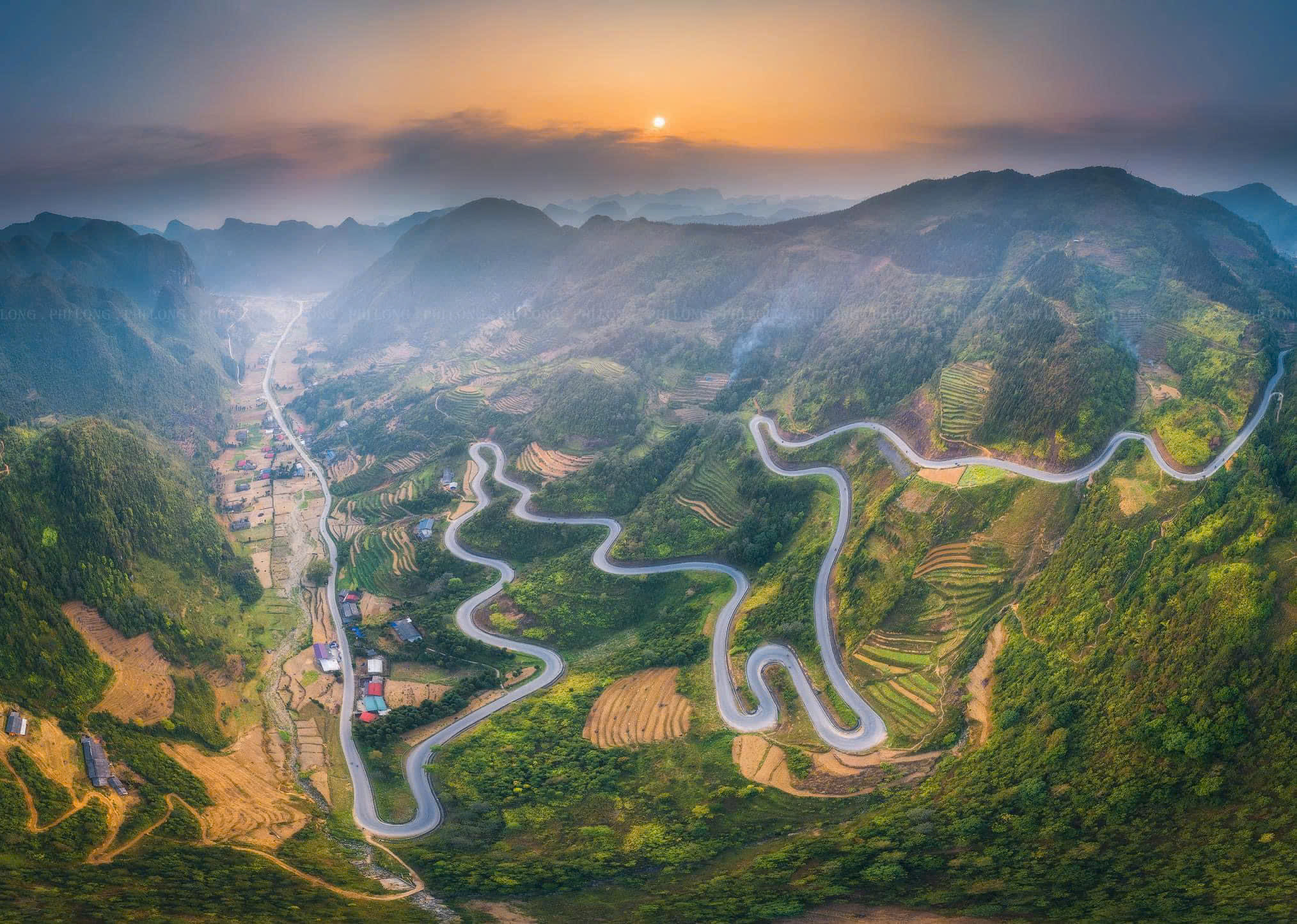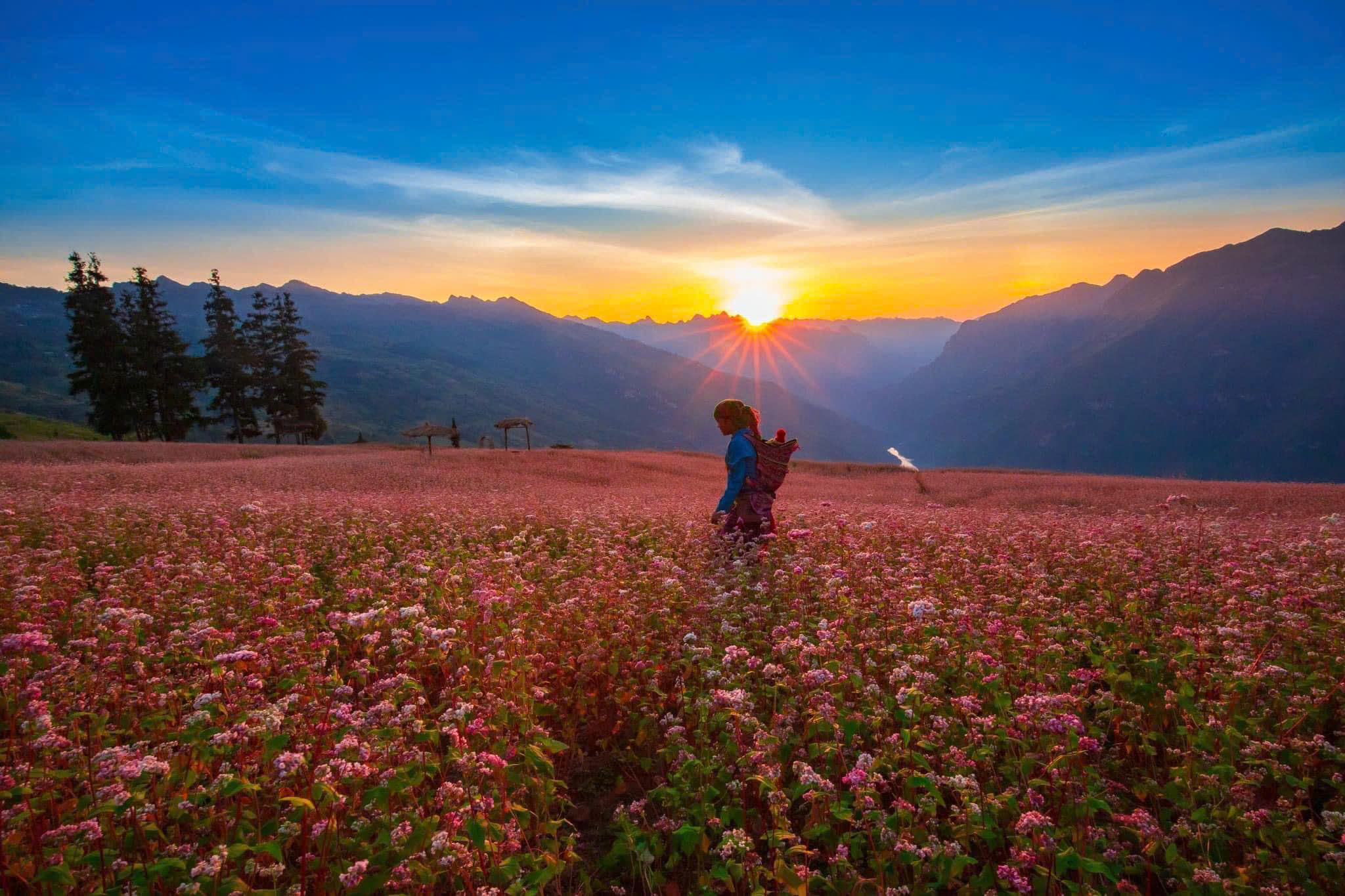

Tucked into the rugged limestone mountains of Ha Giang province, Dong Van Market stands as the vibrant cultural heart of the Dong Van Karst Plateau Geopark. Unlike the commercialized tourist markets found in Vietnam's major cities, this Sunday gathering remains an authentic weekly tradition where ethnic minorities come not just to trade, but to preserve centuries-old customs, reconnect with community, and celebrate their highland identity.
Every Sunday morning, the quiet town of Dong Van transforms into a kaleidoscope of embroidered costumes, mountain produce, and the melodic sounds of minority languages. For travelers seeking genuine cultural immersion beyond Vietnam's typical tourist trail, Dong Van Market in Ha Giang offers an unfiltered glimpse into the lives of the Hmong, Tay, Dao, Lo Lo, Giay, and Nung people who call these remote mountains home.
What Is Dong Van Market?
More Than a Trading Place
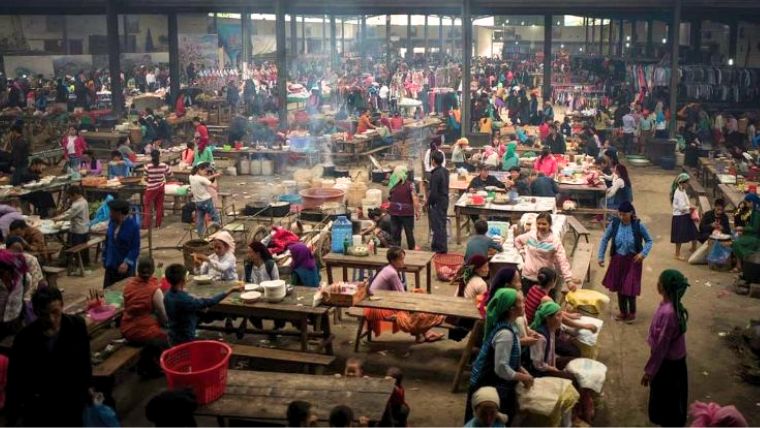
Dong Van Market functions as far more than a commercial venue. It's a weekly social institution that has sustained highland communities for generations. Every Sunday, ethnic families trek for hours from scattered villages across the karst plateau, carrying baskets of produce, livestock, and handwoven textiles to this central meeting point.
The market serves multiple vital functions in local life. Older relatives reunite with family members who've moved to distant villages. Young people meet potential partners under the watchful eyes of elders. Friends exchange news, share meals, and maintain linguistic traditions that might otherwise fade in Vietnam's rapidly modernizing landscape. The Hmong phrase for market day translates roughly to "going to meet people," capturing this deeper social purpose.
Six major ethnic groups converge here each week, each distinguishable by distinctive traditional dress. The Hmong women wear indigo-dyed skirts with intricate batik patterns and heavy silver jewelry. Dao women favor bright red head wraps and embroidered tunics. The rare Black Lo Lo people, one of Vietnam's smallest ethnic groups, arrive in striking all-black ensembles with geometric trim. This weekly gathering represents one of the few remaining places where traditional costumes are everyday wear rather than tourist performance.
Historical Background of Dong Van Market
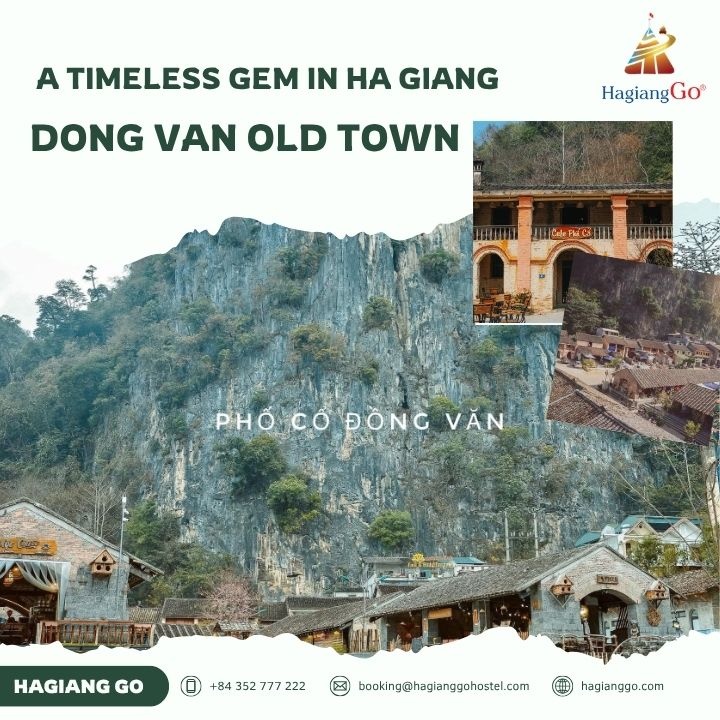
The market's origins trace back to the early 20th century when Dong Van served as a trading post along routes connecting Vietnam with China's Yunnan province. The town's old quarter, built primarily between 1920-1930, reflects this cross-border heritage through its unique blend of Chinese tube houses, French colonial influences, and traditional Vietnamese architecture.
Wealthy Hmong traders and Chinese merchants constructed two-story buildings with carved wooden balconies, stone foundations, and tiled roofs that still frame the market square today. These structures have earned Dong Van recognition as a National Historical Relic, with preservation efforts maintaining the quarter's atmospheric character while the market continues to function much as it did a century ago.
Despite modernization pressures (paved roads reaching Dong Van in the 1990s, mobile phones arriving in the 2000s, and tourism growing steadily since 2010), the market has retained its authentic character. Unlike some ethnic markets that have become primarily tourist attractions, Dong Van Market remains first and foremost a local gathering where tourists are welcome observers rather than the primary audience.
When and how to visit Ha Giang Dong Van market
Opening Time
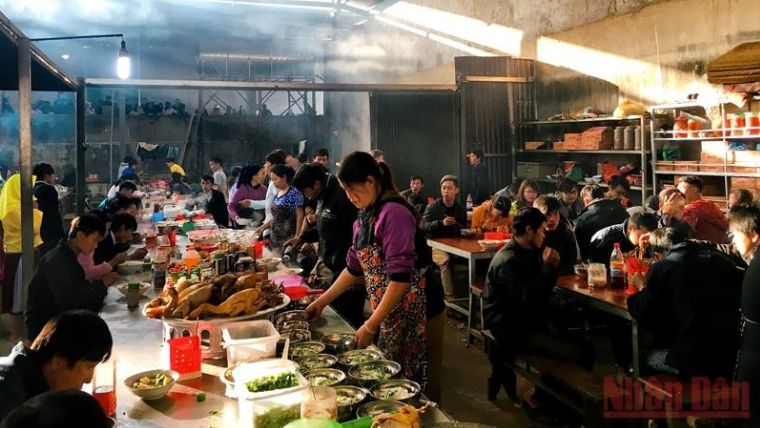
Dong Van Market operates exclusively on Sundays, beginning before dawn and winding down by early afternoon. Vendors start arriving as early as 4:30-5:00 AM, with the most intense activity occurring between 6:00-9:30 AM. By noon, most traders have packed up and begun their long journeys home.
Best visiting hours: 6:00-9:30 AM
Arriving during these prime hours ensures you'll experience the market at its most vibrant, when livestock trading is in full swing, food stalls are steaming with fresh breakfast dishes, and the crowds create the energetic atmosphere that defines the experience. Early morning also offers the best light for photography as the sun illuminates the old quarter's architecture.
Getting There
Dong Van sits approximately 150 kilometers north of Ha Giang City, positioned near Vietnam's northern border in one of the country's most remote regions.
From Ha Giang City:
- Motorbike (5-6 hours via the Ha Giang Loop): The most popular option among independent travelers. The route passes through Quan Ba (Heaven's Gate), Yen Minh, and offers stunning karst plateau scenery. Road conditions are generally good but include steep mountain passes.
- Private car/van (4-5 hours): More comfortable for those not confident riding mountain roads. Can be arranged through Ha Giang tour operators or hotels.
- Local bus (6-7 hours): Budget option departing Ha Giang bus station. Less frequent and makes multiple stops.
- Organized tour: Many agencies offer multi-day Ha Giang Loop tours timed to reach Dong Van on Sunday morning.
Pro tip: Stay overnight in Dong Van town on Saturday night. This ensures you arrive at the market during peak hours and allows time to explore the old quarter. Accommodations range from basic guesthouses (150,000-250,000 VND) to more comfortable hotels (400,000-800,000 VND).
Cultural Values of Dong Van Market
Ethnic Costumes and Identity
The traditional clothing on display at Dong Van Market tells complex stories of cultural identity, social status, and artistic heritage that extends back centuries.
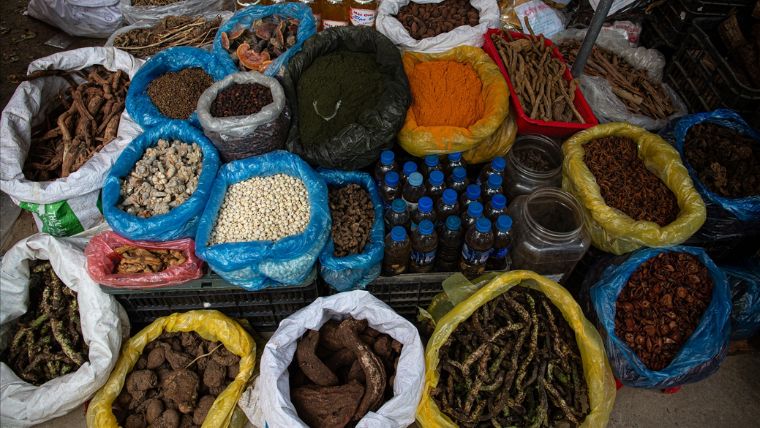
Hmong women's indigo garments require months of labor: growing and processing hemp, weaving fabric on wooden looms, dyeing cloth through repeated indigo baths, and applying intricate batik patterns using beeswax and natural dyes. The silver necklaces, bracelets, and headdresses they wear represent family wealth and are often passed through generations. Subtle differences in embroidery patterns and pleating styles distinguish sub-groups like Flower Hmong, Black Hmong, and White Hmong.
Dao women's red turbans signify marital status and sub-group affiliation, while their embroidery incorporates symbolic motifs. Dragons represent prosperity, phoenixes symbolize happiness, and geometric patterns depict rice fields or mountain ranges. The coins and silver ornaments adorning their clothing jingle softly as they walk, creating the market's distinctive soundtrack.
The Black Lo Lo people, numbering fewer than 1,000 in Vietnam, maintain perhaps the most distinctive dress code. Their all-black ensembles feature conical hats with colorful geometric borders, jackets with elaborate trim, and silver jewelry unique to their group. Spotting Lo Lo families at the market offers a rare glimpse of one of Southeast Asia's least-known cultures.
These costumes are not tourist performances. They're everyday wear for market day, representing cultural pride and group identity in ways that resist homogenization.
Community and Social Connection
The market's social function often overshadows its economic purpose. Families scattered across dozens of remote villages use Sunday as their primary opportunity for face-to-face contact in an area where many settlements lack reliable cell service.
Elderly women gather in circles, sharing tobacco from long pipes while catching up on community news. Young men cluster around livestock pens, debating the qualities of buffalo and discussing farming techniques. Teenage girls browse fabric stalls together, trying on silver jewelry and exchanging whispered conversations about boys and village gossip.
The market plays a crucial role in matchmaking traditions. Parents discreetly evaluate potential partners for their children, noting industriousness, family background, and social standing. Young people use market day as one of the few socially acceptable venues for interacting with the opposite sex outside immediate family circles. Traditional courtship songs and flute playing sometimes emerge in quiet corners of the market, continuing customs that predate modern Vietnam by centuries.
Language preservation also occurs organically here. In villages increasingly exposed to Vietnamese television and education, the market remains a space where Hmong, Dao, and other minority languages dominate, allowing children to hear fluent traditional speech and maintaining linguistic diversity.
Traditional Music and Lifestyle
Listen carefully amid the market bustle and you'll hear sounds that have echoed through these mountains for generations. Hmong men play the khèn (bamboo panpipes), creating haunting melodies that once served as courtship signals. Elderly musicians sometimes gather to play traditional string instruments and sing folk songs recounting historical migrations and cultural heroes.
The market also showcases daily life rhythms that remain connected to subsistence farming and seasonal cycles. Conversations revolve around planting schedules, weather patterns, and animal husbandry rather than the concerns dominating urban Vietnamese life. The goods for sale (handwoven baskets, farming implements, herbal medicines) reflect a lifestyle still closely tied to the land and traditional knowledge.
What to See at Dong Van Market
Food Area
The market's food section offers authentic mountain cuisine rarely found in Vietnamese restaurants, with dishes reflecting the harsh climate, local ingredients, and ethnic cooking traditions.
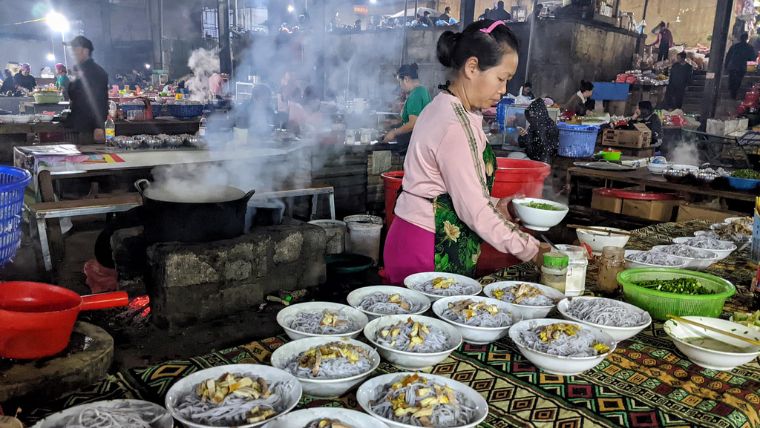
Thắng cố stands as the signature dish. It's a hearty horse meat stew simmered for hours with offal, herbs, and mountain spices. Traditionally eaten communally from large bowls, it's considered warming and energizing, perfect for the cold highland mornings. The dish originated as a practical way to utilize every part of the animal in a region where meat was scarce.
Buckwheat cakes (bánh tam giác mạch) appear in neat triangular stacks, made from locally grown buckwheat flour. These mildly sweet cakes have a distinctive nutty flavor and slightly chewy texture. They're often served warm and represent one of the few grain crops that thrives at Dong Van's elevation.
Other specialties include:
- Grilled corn seasoned with salt or scallion oil
- Sticky rice (xôi) in various colors, steamed in bamboo tubes
- Corn wine (rượu ngô): potent homemade spirits sold in recycled bottles
- Smoked meats hung from stall frameworks
- Five-color sticky rice (xôi ngũ sắc) using natural plant dyes
Prices remain remarkably affordable (10,000-30,000 VND for most items), and food stalls welcome curious tourists. Don't hesitate to try unfamiliar dishes. Vendors are generally patient with foreigners and happy to explain ingredients.
Handicrafts and Goods
The handicraft section showcases the artistic traditions that distinguish highland cultures, with many items still produced using centuries-old techniques.
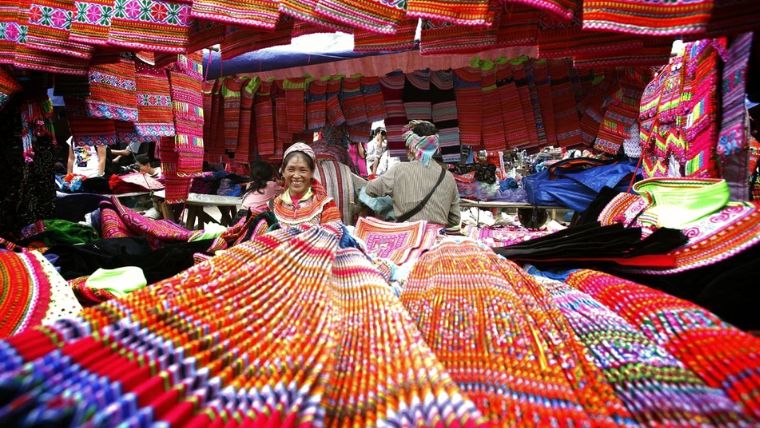
Brocade fabrics dominate textile stalls. These are intricately patterned cloths woven on back-strap looms using traditional geometric and symbolic designs. These fabrics serve as clothing, baby carriers, bags, and decorative items. Authentic pieces take weeks to produce and feature naturally dyed threads in indigo, black, red, and white combinations.
Silver jewelry includes necklaces, bracelets, earrings, and decorative pieces specific to different ethnic groups. Much of the silver comes from melted-down old French Indochinese coins, adding historical significance. Quality varies widely, so examine pieces carefully. Authentic silver has weight and usually shows slight imperfections from handcrafting.
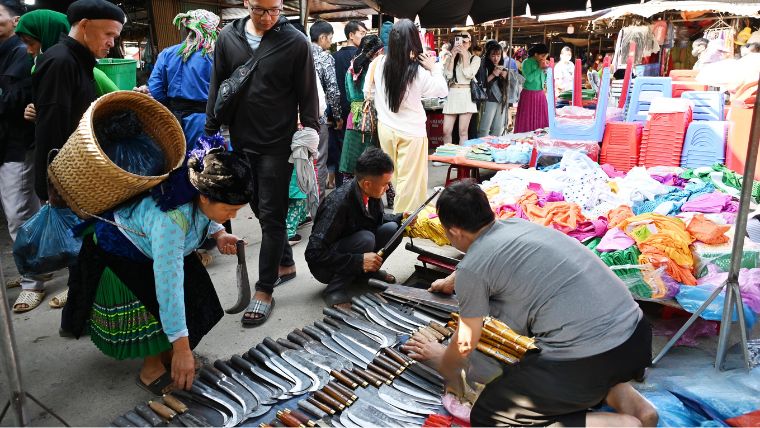
Farming tools and household items fill practical vendor sections: woven bamboo baskets, wooden rice mortars, hunting crossbows, herb-gathering baskets, and hand-forged knives. While less photogenic than textiles, these items reveal the ingenuity of mountain life where most household goods are still locally produced.
Buying tips:
- Authentic handwoven textiles feel slightly irregular and show minor imperfections
- Ask vendors about production process. Genuine craftspeople can explain techniques in detail
- Natural dyes create more muted, complex colors than synthetic alternatives
- Prices are negotiable but remain low by international standards (50,000-500,000 VND for most items)
Livestock Section
The livestock area (often overlooked by tourists) offers fascinating insight into the rural economy that sustains highland communities.
Buffalo, cows, pigs, goats, and chickens change hands through negotiations conducted in ethnic languages with body language, hand gestures, and eventually Vietnamese numbers when final prices are discussed. Buyers examine animals with practiced eyes, checking teeth, feeling muscle tone, and assessing health before making offers.
The livestock section reveals economic realities often invisible in tourist-focused areas. A buffalo represents months of saved income for a farming family. The sale of piglets provides school fees for children. Chickens serve as both investment and insurance against crop failures.
Watching these transactions unfold (farmers arguing over a pig's weight, families pooling money to purchase a cow, children tasked with managing goats) provides unscripted insight into the economic backbone of highland life.
Travel Guide for first-time traveler
How to Experience Like a Local
Arrive early to catch the market's most authentic atmosphere before tour groups arrive around 9:00 AM. The period from 6:00-7:30 AM sees the highest local attendance and most active trading.
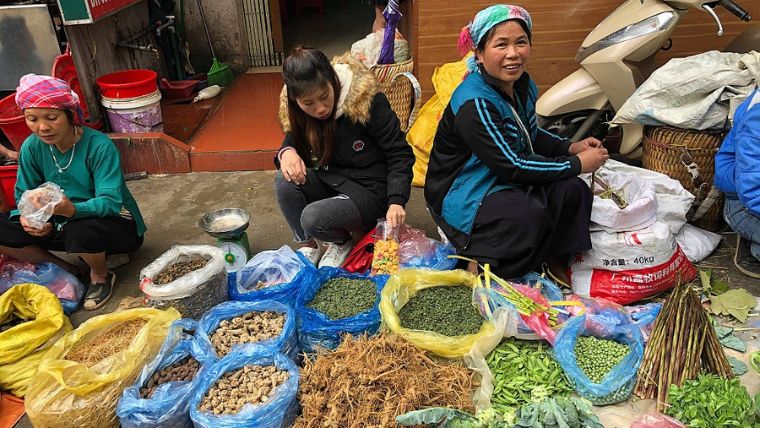
Explore slowly on foot rather than rushing through with a camera. Spend time observing interactions, listening to languages, and watching how transactions unfold. The market's cultural value lies more in these lived moments than in any specific sight.
Photography etiquette matters significantly. Many ethnic minorities hold traditional beliefs about photographs capturing spirits or feel uncomfortable being treated as tourist attractions. Always ask permission before photographing people, especially close-up portraits. A smile, gesture toward your camera, and "Xin chào, có thể chụp ảnh không?" (Hello, may I take a photo?) goes far. Many people will decline. Respect this gracefully. Consider purchasing small items from people you photograph as a gesture of respect.
Useful Vietnamese phrases:
- "Xin chào" (sin chow): Hello
- "Cảm ơn" (gahm uhn): Thank you
- "Bao nhiêu?" (bow nyew): How much?
- "Đẹp quá" (dep gwah): Very beautiful
- "Có thể chụp ảnh không?" (gaw tay choop ahn kohm?): May I take a photo?
Engage respectfully with vendors even if not purchasing. Asking about production processes or where items come from shows genuine interest and often leads to more meaningful interactions than simply snapping photos and moving on.
Budget Tips
Dong Van Market remains remarkably affordable, though bringing adequate cash is essential as virtually no vendors accept cards or mobile payments.
Typical prices:
- Breakfast dishes: 15,000-35,000 VND
- Corn wine (small bottle): 20,000-40,000 VND
- Handwoven textiles: 100,000-500,000 VND
- Silver jewelry: 50,000-300,000 VND
- Bamboo/wooden crafts: 20,000-150,000 VND
- Buckwheat cakes (package): 10,000-20,000 VND
Bargaining approach: Gentle negotiation is acceptable and expected for handicrafts and jewelry, but recognize that asking prices are already low. Aggressive bargaining over small amounts disrespects artisans who spend weeks creating handmade items. A reasonable approach is offering 70-80% of the initial price and meeting somewhere in the middle.
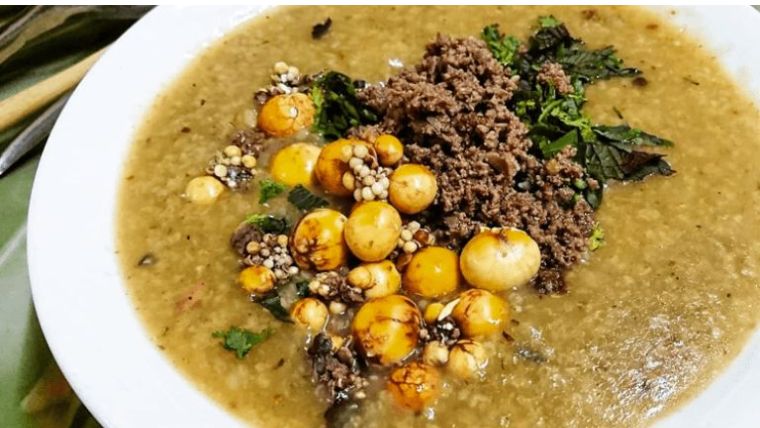
Food prices are generally fixed and extremely reasonable. Haggling over a 15,000 VND bowl of soup seems petty to most vendors.
Cash recommendations: Bring at least 500,000 VND in small bills (20,000, 50,000, 100,000 denominations). The nearest ATM is in Dong Van town center, which sometimes runs out of cash on Sunday mornings.
What to Wear and Bring?
Seasonal clothing considerations:
Winter (November-March): Temperatures drop significantly in the highlands, often reaching 5-10°C in early morning. Bring warm layers including a fleece or jacket, long pants, and closed shoes. Market areas can be muddy after rain.
Summer (June-August): While warmer, mornings remain cool. Lightweight long sleeves provide sun protection and cultural respect. Afternoons can become quite hot.
Essential items:
- Comfortable walking shoes (the market involves extensive standing/walking on uneven ground)
- Small denominations of Vietnamese dong in cash
- Camera with respectful attitude toward photographing people
- Reusable water bottle
- Small backpack or bag for purchases
- Sun protection (hat, sunscreen) for morning light
What to leave behind: Large bags, expensive jewelry, and valuables you don't need. While the market is generally safe, crowded areas present pickpocketing opportunities.
Combine Dong Van Market With Nearby Attractions
Dong Van's location makes it an ideal base for exploring several of northern Vietnam's most spectacular destinations.
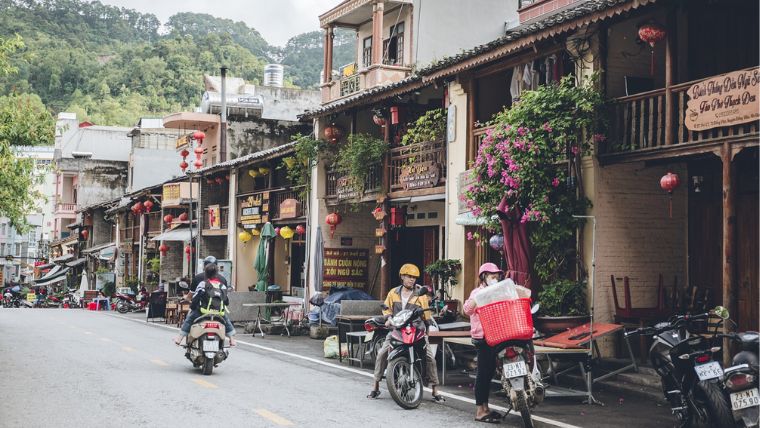
Dong Van Old Quarter (walking distance from market): This preserved historic district features 19 ancient houses built in the early 20th century by Hmong and Chinese traders. The Vuong Family Palace (Dinh Vua Mèo), a mansion combining Chinese, French, and local architectural elements, offers guided tours revealing the complex history of opium trade and French colonial influence in the region. Entrance: 20,000 VND.
Ma Pi Leng Pass (20km from Dong Van): Widely considered one of Vietnam's most spectacular mountain passes, this stretch of road carved into cliffside offers breathtaking views over the Nho Que River canyon 2,000 meters below. Best visited on a clear day with your own transportation to stop at viewpoints. The Ma Pi Leng Skyway, a glass-bottomed walkway extending from the cliff, opened in recent years (entrance: 100,000 VND).
Nho Que River (accessible from Ma Pi Leng Pass): This turquoise river cutting through the karst landscape can be viewed from above or explored via boat tours departing from various points along the canyon. Boat tours cost approximately 200,000-300,000 VND per person.
Lung Cu Flag Tower (25km from Dong Van): Vietnam's northernmost point features a flag tower marking the border with China. The site offers panoramic views across the plateau and symbolic significance as the country's territorial extreme. Road conditions are good but include steep sections.
Meo Vac Sunday Market (30km from Dong Van): For travelers with extra time, this alternative Sunday market offers a similar but often less touristy experience with strong Hmong presence. The town of Meo Vac also serves as starting point for Ma Pi Leng Pass.
Suggested itinerary:
- Saturday: Arrive Dong Van, explore old quarter, overnight in town
- Sunday morning: Dong Van Market (6:00-10:00 AM)
- Sunday afternoon: Drive Ma Pi Leng Pass to Meo Vac, optional market visit if still operating, continue to Ha Giang or stay in Meo Vac
- Monday: Return journey via different routes or continue exploring the Ha Giang Loop
Frequently Asked Questions
Is Dong Van Market touristy or authentic?
Mostly authentic. The market is still mainly for local ethnic minorities to trade and socialize. Tourists are present but remain a minority, especially early in the morning. Some vendors sell souvenirs, but the market still feels genuinely local.
Can I visit on other days?
No. Dong Van Market only happens on Sundays. The town is nice to visit any day, but the main market runs once a week.
Is it suitable for families and children?
Yes, especially for school-age kids. It’s safe and colorful, but crowded, noisy, and involves lots of walking. Strollers aren’t practical, and the livestock area may be disturbing for sensitive children.
How long should I spend there?
About 2–4 hours. Visit early (around 6:00–10:00 AM) for the best atmosphere. After late morning, the market quickly winds down.
Conclusion
Ready to experience Dong Van Market? Plan your Ha Giang Loop journey to reach Dong Van on Saturday evening, wake early on Sunday morning, and prepare for one of Vietnam's most memorable cultural encounters. The mountains, markets, and minority cultures of the Dong Van Karst Plateau await. Just remember to bring cash, charge your camera, and pack an open mind ready to experience Vietnam far beyond the guidebook clichés.