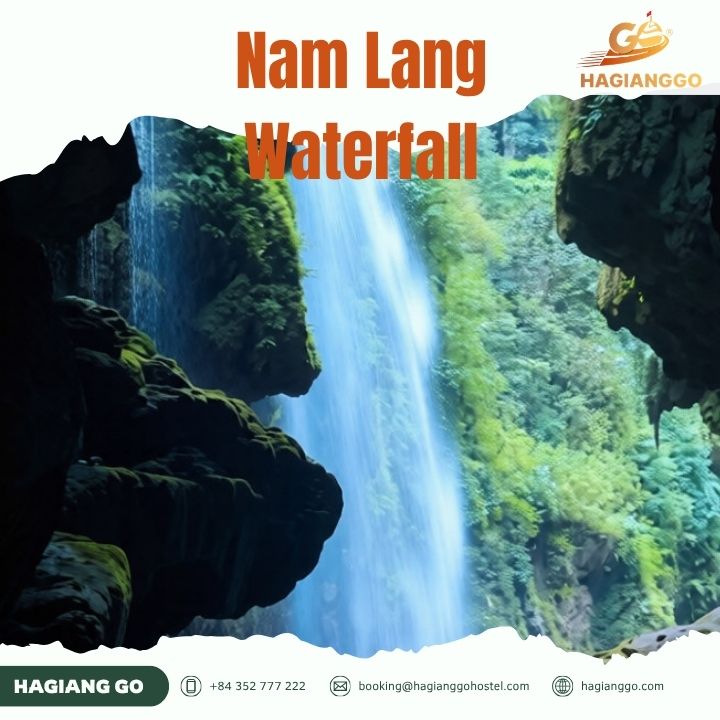

What Is Nam Lang Waterfall?
Nam Lang Waterfall is a natural cascade in the Du Gia - Duong Thuong area, within what travelers traditionally know as the Ha Giang region.
The waterfall is approximately 20 meters high and descends from an underground cave through several levels. Its lower section is known for clear blue-green water, limestone formations and natural stalactites.
Older travel material also refers to the site as:
- Nậm Lang Waterfall
- Phin Ty Waterfall
- Nam Lang Hydropower Waterfall
A 2024 adventure guide described the site near Phin Ty and the Nam Lang hydropower area, while more recent 2026 reporting uses Nam Lang Waterfall as the main name.
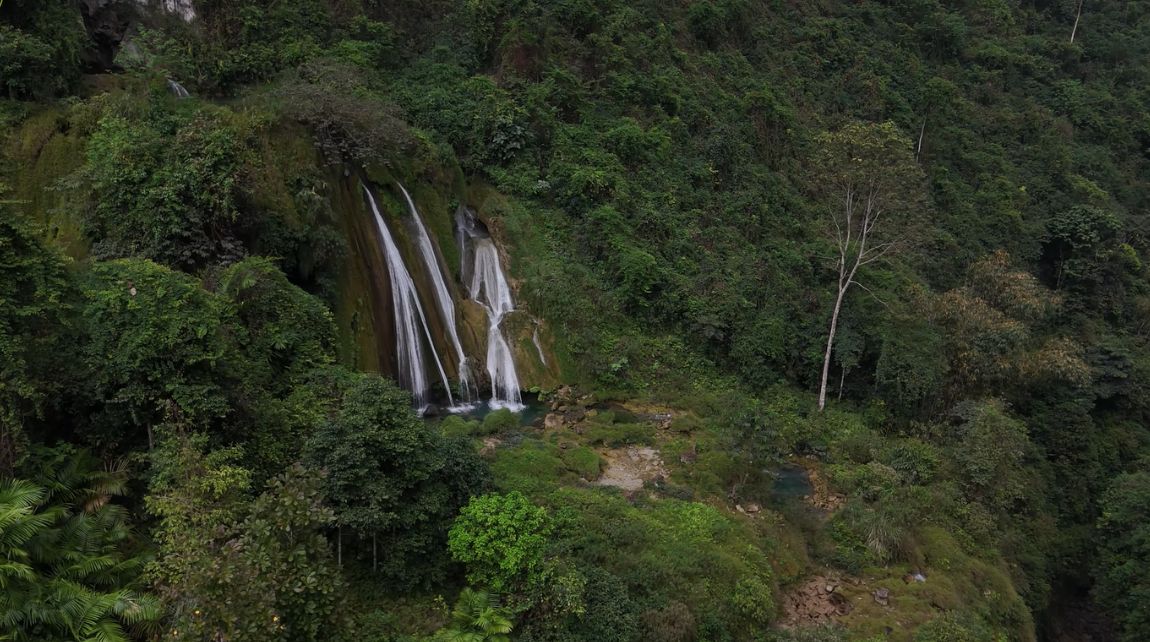
Where Is Nam Lang Waterfall?
Nam Lang Waterfall is located roughly 10–13 km from central Du Gia, depending on the reference point and route used.
Du Gia is a well-known overnight stop on the eastern part of the Ha Giang Loop, usually visited on routes connecting Meo Vac, Mau Due, Du Gia and Ha Giang.
Following Vietnam's 2025 administrative changes, current reporting places the waterfall within Duong Thuong commune, Tuyen Quang Province. Travelers will still commonly see it described as being in “Ha Giang” because that remains the established tourism name for the Loop region.
Is Nam Lang Waterfall Part of the Ha Giang Loop?
Not exactly.
Nam Lang is near the Du Gia section of the Loop, but it is not one of the standard official stops such as:
- Quan Ba Heaven Gate
- Dong Van Karst Plateau
- Ma Pi Leng Pass
- or Du Gia village itself.
Visiting the waterfall requires leaving the normal route and entering a much rougher area. More importantly, current access and safety restrictions mean travelers should not add Nam Lang to an itinerary unless local authorities and a licensed tour operator confirm that access is permitted at that time.
Why Did Nam Lang Waterfall Become Popular?
Nam Lang Waterfall gained attention largely through social media.
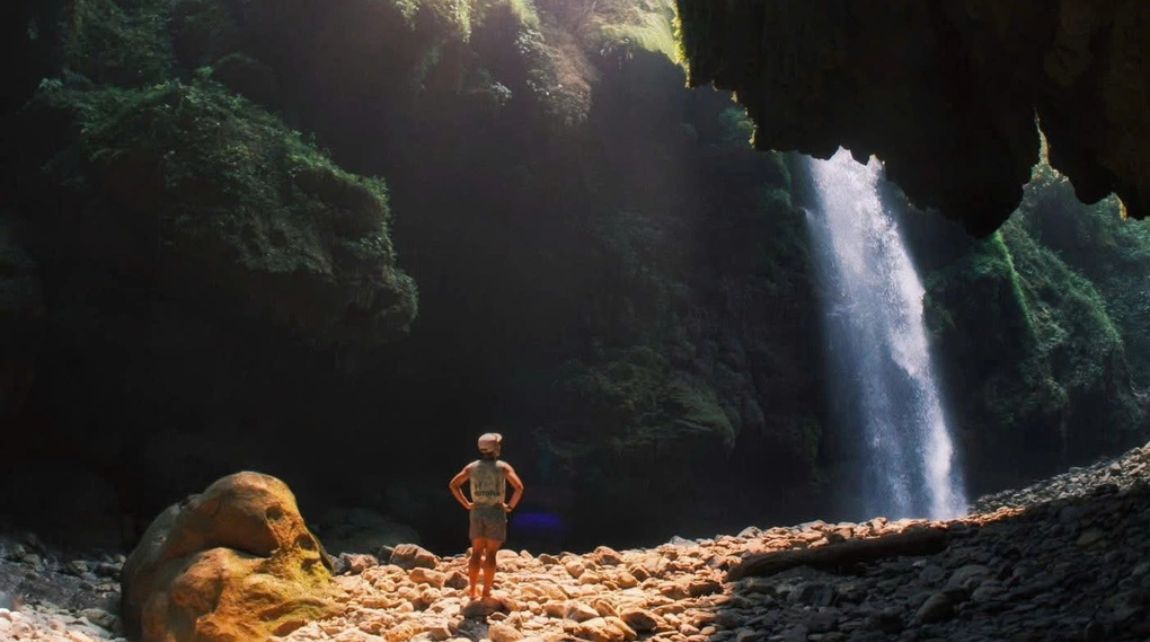
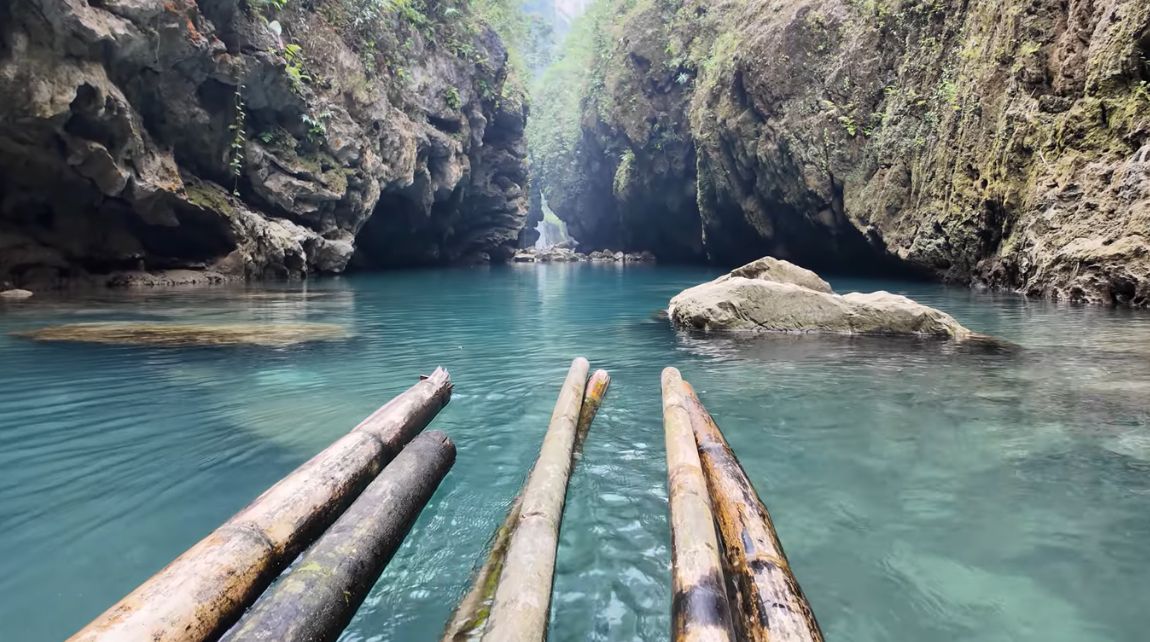
Images of travelers floating on rafts or stand-up paddleboards beneath limestone caves helped turn a previously little-known location into a sought-after Ha Giang stop. Recent reporting specifically notes that the waterfall experienced a surge in interest after photographs and videos spread online.
The appeal is easy to understand:
- Turquoise water
- Waterfall emerging from a limestone cave
- Natural rock formations
- Very little built tourism infrastructure
- Remote mountain setting
- Proximity to Du Gia
But its undeveloped character is also the main reason travelers need to be cautious.
Nam Lang is not a conventional waterfall attraction with established paths, lifeguards, regulated swimming zones or controlled water levels.
Is Nam Lang Waterfall Open to Tourists in 2026?
There is currently no reliable confirmation that Nam Lang Waterfall is operating as an officially open recreational attraction.
On April 14, 2026, authorities in Duong Thuong instructed local police and relevant units to inspect and handle individuals or organizations bringing visitors into the waterfall area for unauthorized swimming and tourism activities. The action followed a report from the Nam Lang Hydropower Plant concerning unauthorized entry into its management area.
There has been slightly different wording in Vietnamese media about whether this constitutes a complete “ban.”
The local official told that no blanket ban had formerly been issued at that point, but stressed that all activities in the area must comply with regulations and safety requirements.
For travelers, the practical conclusion is the same:
Do not rely on old blogs, Google Maps pins, Facebook posts or Instagram videos as proof that you are currently allowed to enter Nam Lang Waterfall.
Check locally before changing your Ha Giang itinerary.
Why Is Access to Nam Lang Waterfall Restricted?
The concern is primarily safety and unauthorized access, not simply tourism management.
1. The Waterfall Is Inside a Hydropower Management Area
The waterfall lies within the operating area associated with the Nam Lang hydropower project.
Water flow around the site can change unexpectedly because of upstream hydropower operations, creating conditions that are difficult for visitors to predict.
2. Access Involves Deep Water
Reports describe visitors previously reaching sections of the waterfall using rafts, SUP boards or by swimming across deep water.
There are also submerged rocks, increasing the risk of injury even when the surface looks calm.
3. The Approach Road Is Difficult
The access route from the Du Gia area is steep, rocky and challenging.
An older 2024 travel report also noted that the final approach required crossing water and negotiating rough terrain. During periods of higher water, access could become effectively impossible.
4. There Is Limited Tourism Infrastructure
Nam Lang developed as an informal adventure stop rather than a managed tourist attraction.
That means travelers should not expect:
- Lifeguards
- Regulated swimming areas
- Reliable barriers
- Formal rescue infrastructure
- Clearly maintained tourist trails
- Predictable water conditions
This is particularly important for international visitors who may assume that a location appearing regularly on tour videos is an officially managed attraction.
Should You Swim at Nam Lang Waterfall?
No traveler should plan to swim at Nam Lang Waterfall unless authorities have explicitly reopened the area for that activity and current conditions have been assessed as safe.
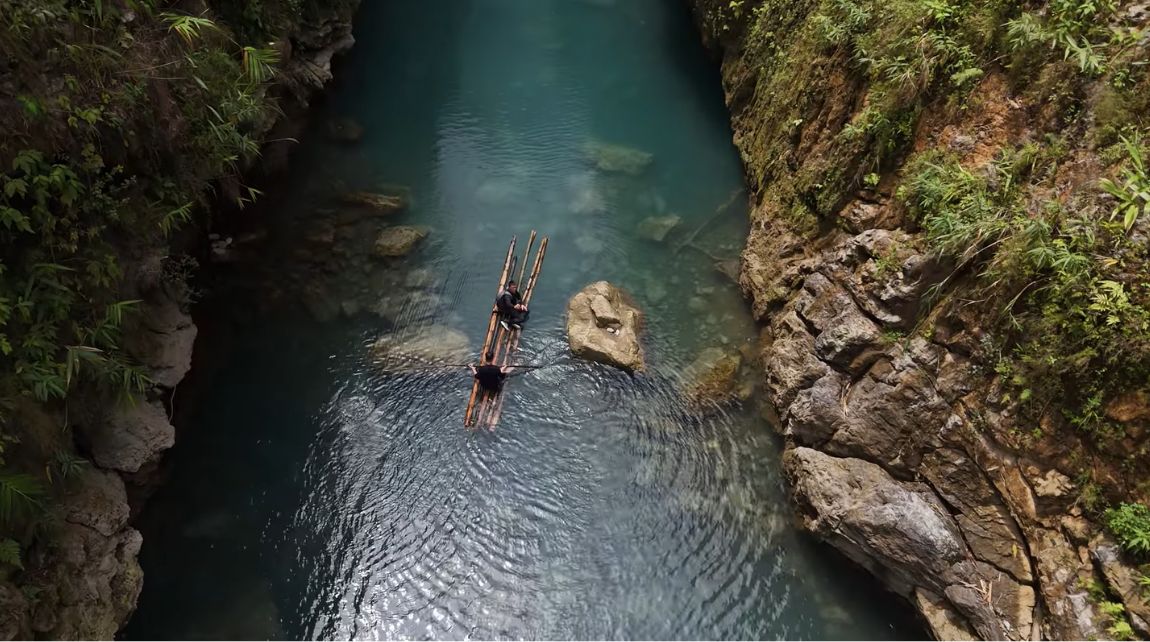
The blue water seen online should not be interpreted as evidence that swimming is safe.
The combination of deep sections, submerged rocks and potentially changing hydropower flows creates risks that are not visible from photographs.
This also means travelers should avoid following social-media instructions that involve:
- Swimming across to reach the waterfall
- Entering by improvised raft
- Using SUP boards without authorization
- Climbing around restricted infrastructure
- Entering hydropower-management zones
Can You Still See Nam Lang Waterfall?
Older reports indicate that sections of the waterfall could be seen from outside the most difficult access area, particularly when high water prevented people from crossing toward the falls.
However, current access boundaries may change, and travelers should not assume that a previous roadside viewpoint remains legally or safely accessible.
If seeing Nam Lang is important to you, ask your accommodation or licensed Ha Giang tour operator for the latest local guidance.
Do not ask a driver or informal guide to bypass a restriction simply because you have seen other visitors doing so online.
Is Nam Lang Waterfall Worth Adding to Your Ha Giang Itinerary?
Not as a fixed itinerary stop under the current conditions.
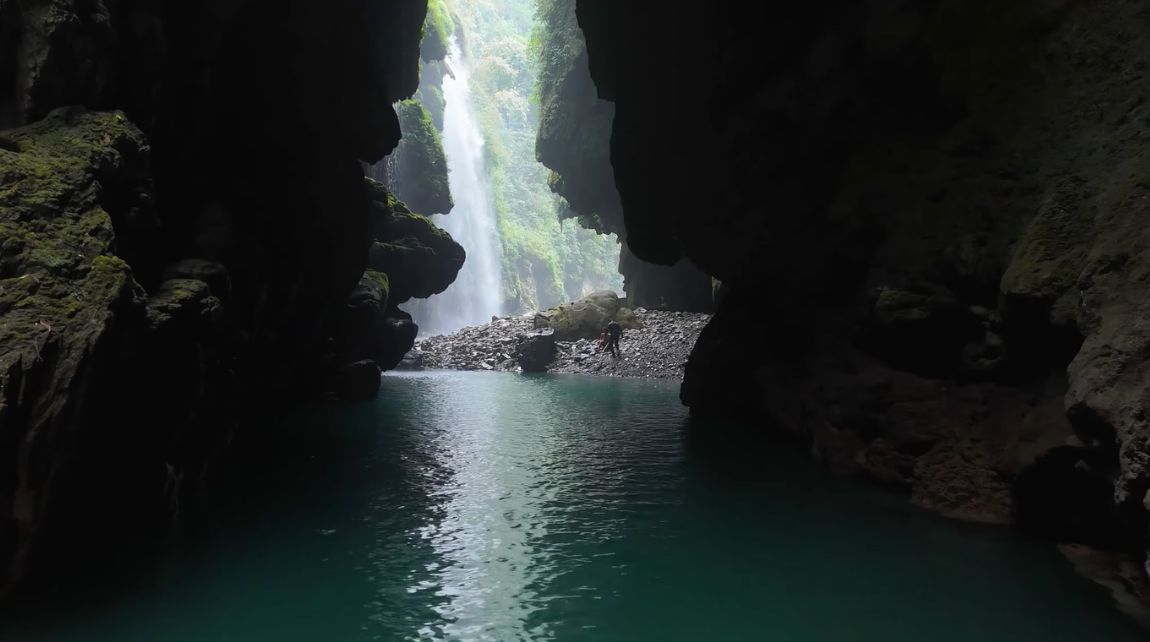
Nam Lang is visually impressive, but a good Ha Giang itinerary should not depend on accessing a place whose visitor status is uncertain.
The better approach is:
- Stay in Du Gia as planned
- Ask locally about the latest Nam Lang access status
- Visit only if official access has been confirmed
- Have an alternative activity ready
This avoids losing half a day trying to reach a site that may be inaccessible.
What to Do Around Du Gia Instead
Du Gia itself is worth visiting even without Nam Lang Waterfall.
The area is known for rural valleys, traditional villages, homestays and a slower atmosphere than the more heavily visited Dong Van - Meo Vac section of the Loop. Local tourism development has long centered on community accommodation and nature-based travel.
Travelers can instead spend time:
- Walking around Du Gia village
- Exploring the surrounding valleys
- Staying at a local homestay
- Visiting public viewpoints
- Taking short walks through rice fields and rural roads
- Continuing toward Duong Thuong and Lung Tam
- Spending more time on the main Ha Giang Loop route
For a broader overview, see HaGiangGo's Du Gia travel guide.
Nam Lang Waterfall vs. Du Gia Waterfall
Travelers sometimes confuse Nam Lang Waterfall with the better-known waterfall commonly associated with Du Gia.
They are not the same destination.
Nam Lang Waterfall
- Roughly 10–13 km from central Du Gia
- Around 20 meters high
- Multi-tiered cascade associated with an underground cave
- Located in a hydropower management area
- Current recreational access is uncertain/restricted
Du Gia Waterfall
- The better-known waterfall traditionally visited around Du Gia
- Has a longer history as a local tourism stop
- Frequently appears in general Du Gia travel information
If an accommodation or guide recommends “the waterfall in Du Gia,” confirm which waterfall they mean before leaving.
Best Time to See Waterfalls Around Du Gia
Waterfall conditions in northern Vietnam depend heavily on recent rainfall.
More water does not automatically mean a better or safer visit. After heavy rain, mountain roads can become slippery and streams can rise rapidly.
For Nam Lang specifically, the current management and access situation is more important than seasonality. Even in apparently good weather, hydropower operations can affect the water flow.
Before heading toward any remote waterfall:
- Check the weather forecast
- Ask about recent rain
- Confirm road conditions
- Check whether the site is officially accessible
- Avoid entering streams after heavy rainfall
- Do not travel into remote sections after dark
Discovering the Magnificent Ha Giang Waterfalls: Your Ultimate Adventure Guide
How Difficult Is the Road to Nam Lang Waterfall?
Reports consistently describe the road as steep, rocky and unsuitable for inexperienced riders.
For international travelers, this matters because Ha Giang's main Loop roads and remote access roads can be very different.
Someone who is comfortable riding the paved sections around Dong Van may still not have the off-road experience required for rough routes around remote waterfalls.
If you are self-riding, do not treat Nam Lang as a place to practice difficult riding.
Travelers without strong mountain-riding experience should use an Easy Rider or local transport for the Ha Giang Loop in general - and should still respect any restrictions around Nam Lang itself.
What Should You Know Before Going?
Before considering Nam Lang Waterfall, check these points:
- Is access currently permitted?
- Has the hydropower operator or local authority restricted entry?
- Have there been recent heavy rains?
- Is the access road currently passable?
- Does your guide or tour operator have legal permission to take visitors there?
- Does the plan involve swimming or rafting through uncontrolled water?
If the answer to the last question is yes and there is no official tourism operation in place, choose another activity.
Visiting Du Gia with HaGiangGo
Du Gia is included in several longer Ha Giang Loop itineraries, making it easy to experience the area without depending on access to Nam Lang Waterfall. HaGiangGo currently offers multi-day Loop tours that travel through the Du Gia section and can adjust stops according to local conditions.
If Nam Lang is on your wishlist, ask the HaGiangGo team about the current local access status before your tour.
A responsible operator should never guarantee entry to a site that is restricted or unsafe.
FAQs about Nam Lang Waterfall
Where is Nam Lang Waterfall?
Nam Lang Waterfall is in the Du Gia–Duong Thuong area of northern Vietnam, roughly 10–13 km from central Du Gia. Current 2026 reports place it in Duong Thuong commune, Tuyen Quang Province, although travelers continue to associate the area with the Ha Giang Loop.
Is Nam Lang Waterfall open in 2026?
Travelers should not currently assume that Nam Lang is an open public attraction. Authorities began inspecting and acting against unauthorized tourism activities there in April 2026. Reporting differs on whether there is a formal blanket ban, but there is no reliable confirmation of unrestricted recreational access.
Why is Nam Lang Waterfall restricted?
The waterfall lies within a hydropower management zone where water levels and flows can change unexpectedly. Access has also involved deep water, submerged rocks and difficult terrain, creating significant safety concerns.
Can you swim at Nam Lang Waterfall?
Do not plan to swim there unless local authorities have officially permitted recreational access and current conditions are confirmed safe. Previous visitors used rafts, SUP boards and swimming to reach sections of the falls, but these activities are part of the current safety concern.
How high is Nam Lang Waterfall?
Current reports describe Nam Lang Waterfall as approximately 20 meters high, with several tiers descending from an underground limestone cave.
Is Nam Lang Waterfall the same as Du Gia Waterfall?
No. Nam Lang is a separate waterfall roughly 10–13 km from Du Gia and is associated with the Nam Lang hydropower area. Travelers should confirm the exact destination when a local guide refers simply to “Du Gia waterfall.”
Can I add Nam Lang Waterfall to a Ha Giang Loop tour?
Only if access is officially permitted when you travel. Do not design your itinerary around Nam Lang without checking its current status. Du Gia itself remains a worthwhile Loop stop even if the waterfall is inaccessible.
Summary
Nam Lang Waterfall is one of the most visually unusual natural sites to gain attention around the Ha Giang Loop in recent years - but 2026 is not the time to treat it as a guaranteed swimming or adventure stop.
If you are traveling through Du Gia:
- Keep Nam Lang optional
- Check its status locally
- Follow official access rules
- Do not cross restricted hydropower areas
- Avoid swimming or rafting without authorized safety arrangements
- Have alternative activities around Du Gia ready
Ha Giang rewards curiosity, but responsible travel also means knowing when not to follow a viral location.
If Nam Lang officially opens to visitors in the future with managed access and safety infrastructure, it could become an exceptional addition to the Du Gia experience. Until then, enjoy the wider landscape and let local conditions determine whether the waterfall belongs on your route.