
Ha Giang in October is a particularly appealing time to explore northern Vietnam, with cooler mountain weather, golden rice terraces and the beginning of the buckwheat flower season. If you are planning to ride the Ha Giang Loop, October offers a good combination of seasonal scenery and more comfortable conditions than the hotter, wetter summer months.
However, early and late October can feel quite different. Early October is better suited to travelers looking for golden rice landscapes, while buckwheat flowers become more prominent as the month progresses. Mountain weather can also change quickly, so you should prepare for both warm afternoons and cool, wet conditions.
This guide explains what to expect from Ha Giang in October, including weather, seasonal scenery, the Ha Giang Loop, where to go, how many days to spend, what to pack, how to get there from Hanoi, and practical advice for international travelers.
Is October a Good Time to Visit Ha Giang?
Yes. October is an interesting month for visiting Ha Giang because the region is transitioning into its cooler autumn season while the landscape is still full of seasonal color.
One of the main attractions is the changing countryside. Rice terraces can still be golden in early October, while buckwheat flowers begin appearing across the highlands from late September and become increasingly visible through October and November.
For travelers, this means October can offer several experiences in one trip:
- Golden rice terraces
- Buckwheat flower fields
- Cooler mountain temperatures
- Dramatic limestone landscapes
- The Ha Giang Loop
- Local villages and homestays
- Mountain passes and viewpoints
- Ethnic minority cultures and local markets
October is also a practical month for a motorcycle trip because conditions are generally more comfortable than during the hottest and wettest part of the year. However, the Ha Giang Loop remains a challenging mountain journey, and rain, fog and changing road conditions are still possible.
Ha Giang Weather in October
October marks the transition toward the cooler and generally drier season in northern Vietnam.
Temperatures can vary considerably depending on where you are. Ha Giang City sits at a lower elevation, while areas around Dong Van, Meo Vac and Ma Pi Leng are much higher and can feel significantly cooler.
During the day, you may experience pleasant or warm conditions, particularly when the sun is out. Early mornings and evenings can feel cool, especially in the northern highlands.
Rain is still possible in October. Historical climate data shows that the probability of a wet day generally decreases during the month in both Ha Giang City and Dong Van, although mountain weather remains variable.
If you are riding the Loop, the most important thing is not to expect perfectly dry weather. A short rain shower can change road conditions quickly, particularly on steep or winding sections.
It is therefore worth packing a lightweight waterproof jacket even if the forecast looks good.
What is Ha Giang like in early October?
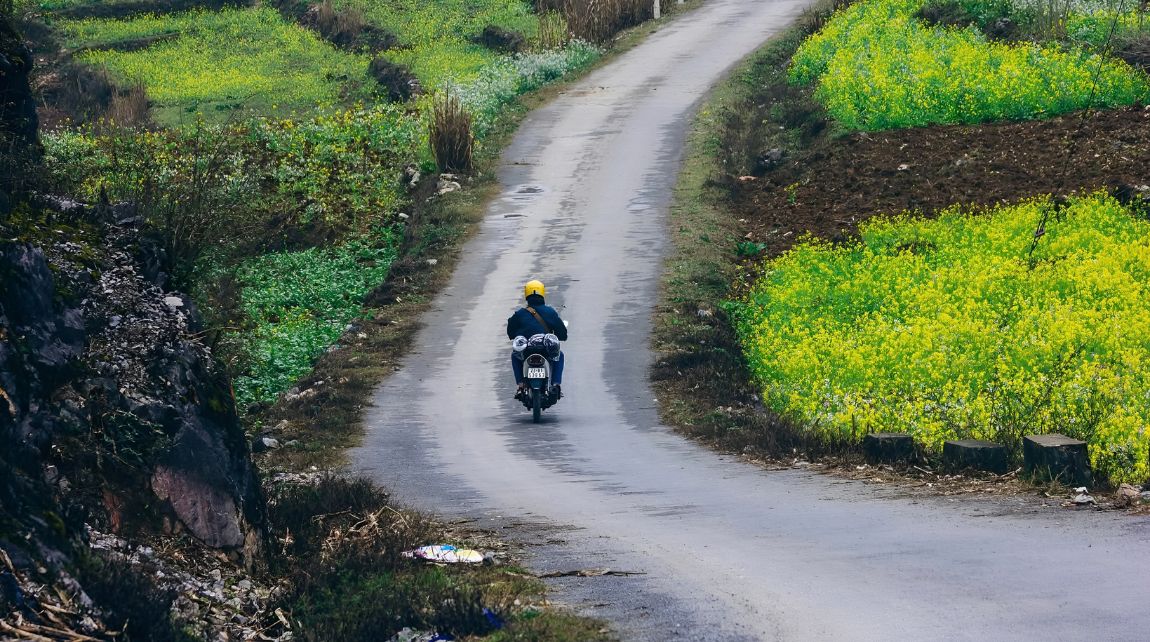
Early October is still influenced by the end of the rice-growing season.
In many areas, rice terraces can be turning golden or undergoing harvest. This makes early October particularly interesting for photographers and travelers who want to see the famous terraced landscapes of northern Vietnam.
The weather can also feel relatively mild compared with the colder months that follow.
What is Ha Giang like in mid-October?
By mid-October, the landscape begins to transition.
Some rice terraces may still show their golden colors, while buckwheat flowers become increasingly visible in the highlands.
This can be a good period if you want a mixture of autumn landscapes rather than focusing exclusively on either rice or flowers.
What is Ha Giang like in late October?
Late October generally brings cooler conditions, particularly in Dong Van, Meo Vac and the mountain passes.
Buckwheat flowers become an increasingly important part of the landscape, especially around areas such as Sung La Valley and Lung Cam.
For travelers interested in flowers, photography and cooler mountain weather, late October can be particularly appealing.
The exact timing of rice harvests and flowering varies by location and year, so these seasonal patterns should be treated as general guidance rather than fixed dates.
What Does Ha Giang Look Like in October?
Ha Giang's landscape is one of the main reasons to visit during October.
The province is characterized by dramatic limestone mountains, deep valleys, winding mountain roads and small villages scattered across the highlands.
During October, these landscapes are combined with seasonal agricultural colors.
Golden Rice Terraces
Rice terraces are one of the defining landscapes of northern Vietnam.
As rice approaches harvest, terraces can change from green to yellow, creating layers of color across the mountain valleys.
Early October is particularly relevant for travelers hoping to see this scenery. However, harvest timing is not identical throughout Ha Giang, so some areas may already have been harvested while others remain golden.
If photographing rice terraces is a major reason for your trip, it is better to treat early October as a general seasonal window rather than expecting every valley to look the same.
Buckwheat Flowers
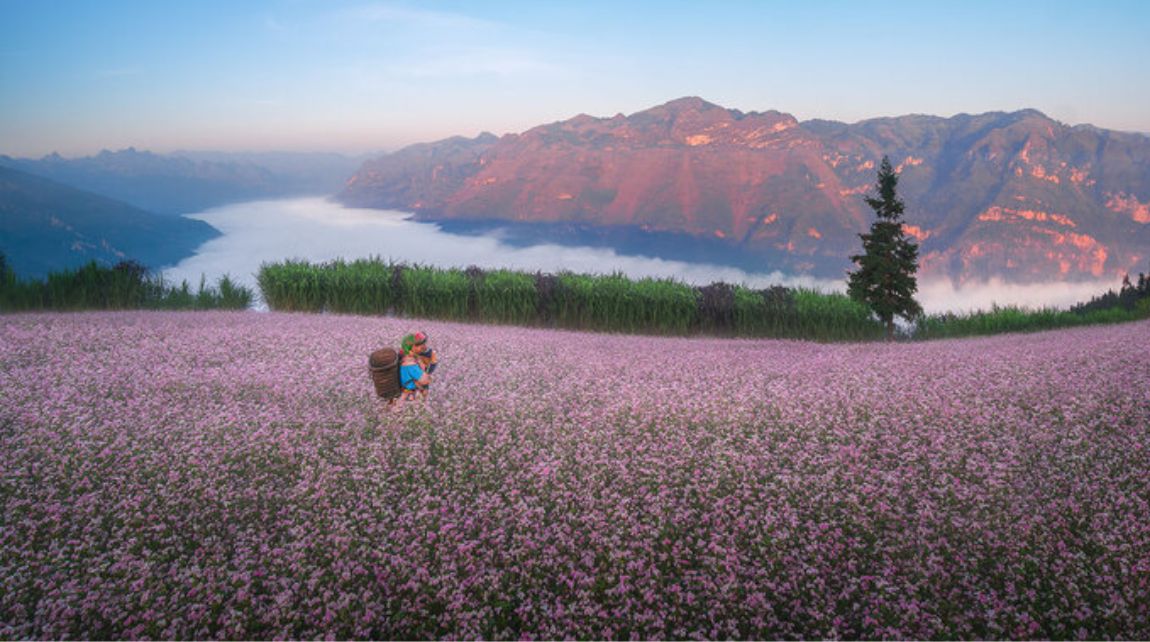
Buckwheat is closely associated with Ha Giang's autumn landscape.
The flowers begin appearing around late September and continue through the autumn. They can range from white to pink and deeper colors as they develop.
Sung La Valley and Lung Cam Village are among the areas associated with buckwheat flowers.
The fields are often located alongside roads, villages and limestone mountains, making them particularly attractive for photography.
When visiting flower fields, avoid walking through cultivated areas or damaging the plants. Many fields are part of local agricultural livelihoods rather than simply tourist attractions.
The Ha Giang Loop in October
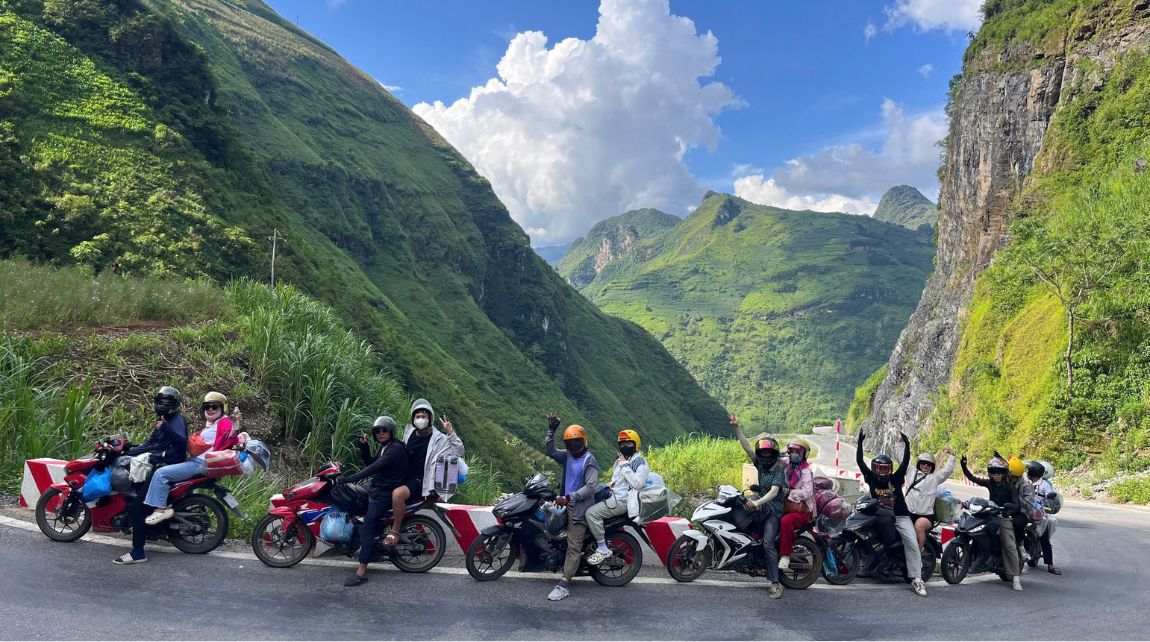
The Ha Giang Loop is a multi-day road journey through the mountainous northern part of Ha Giang Province.
There is no single official route that every traveler must follow. Most itineraries begin in Ha Giang City and travel north toward Quan Ba, Yen Minh and Dong Van before continuing through Ma Pi Leng and Meo Vac. Some routes then return through Du Gia.
A classic route can look like:
Ha Giang → Quan Ba → Yen Minh → Dong Van → Ma Pi Leng → Meo Vac → Du Gia → Ha Giang
The exact route depends on the number of days available, weather, road conditions and the type of experience you want.
October is a popular period for the Loop because the mountain landscape is particularly attractive during the autumn season.
Is the Ha Giang Loop Safe in October?
The Ha Giang Loop requires caution throughout the year.
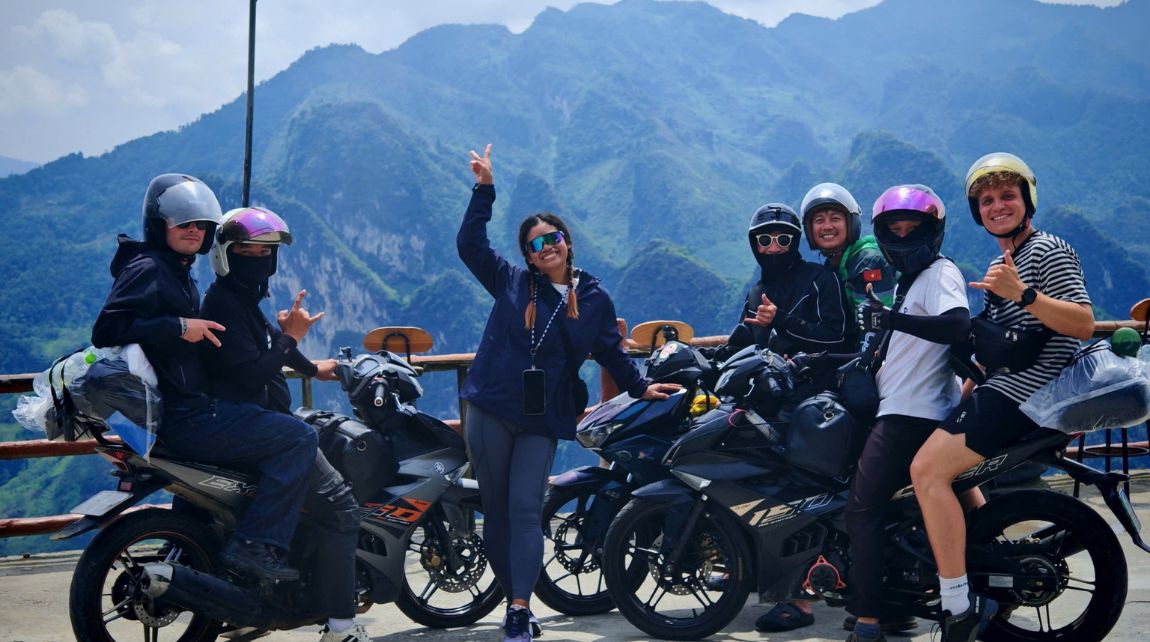
October can provide comfortable riding conditions, but it does not remove the challenges of mountain roads.
You may encounter:
- Steep climbs and descents
- Tight mountain bends
- Narrow roads
- Wet surfaces after rain
- Fog and low visibility
- Road construction
- Local traffic
- Trucks and buses
- Unexpected weather changes
If you are an experienced motorcycle rider who is comfortable with mountain roads, self-riding can be an adventurous way to experience Ha Giang.
If you have little or no experience riding motorcycles, an Easy Rider is a safer and more relaxed way to experience the Loop. You ride as a passenger while a local rider handles the motorcycle.
You can also choose a guided tour, which takes care of the route, accommodation and other logistics.
Most importantly, do not treat the Ha Giang Loop as a normal city motorcycle trip. The roads are part of the adventure, but they also require genuine riding skills and concentration.
Should You Ride the Ha Giang Loop Yourself?
That depends on your riding experience.
Self-riding can suit travelers who:
- Regularly ride motorcycles
- Are confident on winding roads
- Can control a motorcycle on steep climbs and descents
- Are comfortable riding in changing weather
- Understand that road conditions may vary
- Are prepared to ride during daylight
An Easy Rider may be more suitable if:
- You have never ridden a motorcycle before
- You have only ridden scooters in cities
- You are nervous about mountain roads
- You want to focus on photography and scenery
- You do not want to navigate while riding
- You want a local rider to handle the road
You do not need to ride a motorcycle yourself to experience the Ha Giang Loop.
How Many Days Do You Need for the Ha Giang Loop?
The amount of time you need depends on how quickly you want to travel.
2 Days 1 Night
A 2D1N trip is possible if you have very limited time, but it requires a faster pace.
You will spend a significant amount of time riding and will have less opportunity to stop at villages, viewpoints and local attractions.
For travelers coming from Hanoi, this option can also make the overall journey feel rushed.
3 Days 2 Nights
Three days and two nights is a practical option for travelers who want to experience the classic Loop without spending too much time away from the rest of Vietnam.
A typical itinerary can include:
Day 1: Ha Giang → Quan Ba → Yen Minh
Day 2: Yen Minh → Dong Van → Ma Pi Leng → Meo Vac
Day 3: Meo Vac → Du Gia → Ha Giang
The exact route may change depending on weather and road conditions.
4 Days 3 Nights
Four days and three nights gives you more time to slow down.
Instead of treating every stop as a quick photo opportunity, you can spend more time exploring villages, visiting local attractions and enjoying the mountain scenery.
A longer itinerary can also make the riding experience less tiring.
For international travelers who have enough time, 4D3N can be useful if your priority is experiencing the region rather than simply completing the Loop.
Five Days or Longer
A longer trip makes sense if you want to explore beyond the classic route or combine Ha Giang with other northern destinations.
It also gives you more flexibility if bad weather or road conditions force you to change your schedule.
Best Places to Visit in Ha Giang in October
Quan Ba and Heaven's Gate
Quan Ba is one of the first major mountain areas after leaving Ha Giang City.
The road climbs through the mountains toward Heaven's Gate, where you can look across the surrounding valleys and limestone peaks.
The Quan Ba Twin Mountains are another recognizable landscape in this area.
This is a good introduction to the scenery of the Ha Giang Loop before you reach the higher northern sections.
Yen Minh
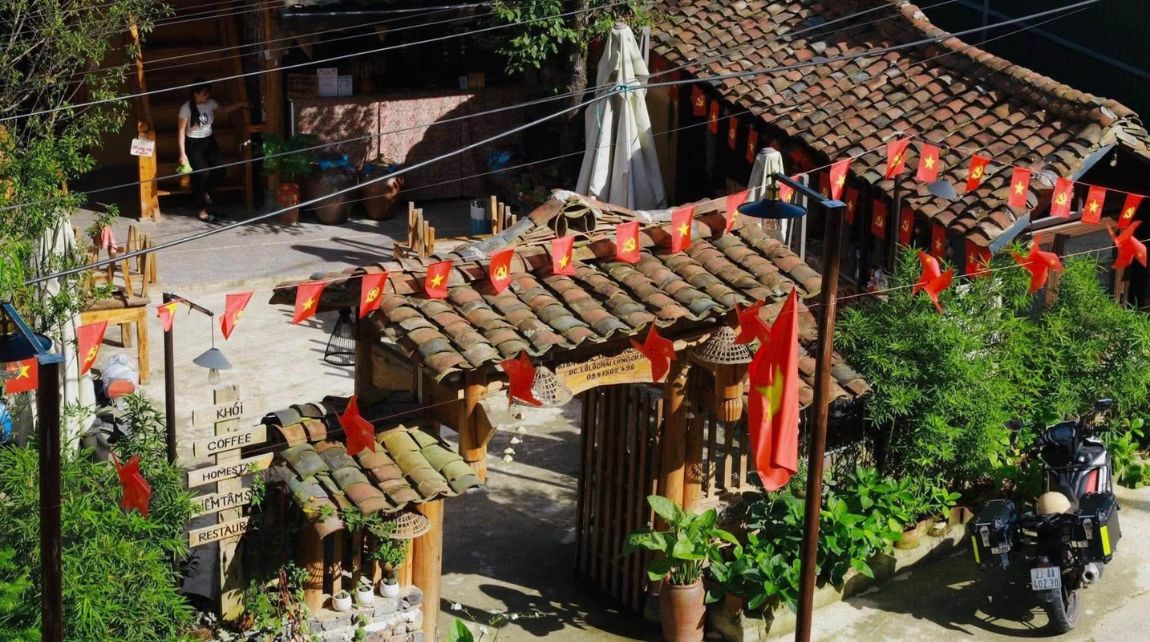
Yen Minh is commonly used as an overnight stop on the Loop.
The surrounding landscape includes forests, valleys, limestone mountains and agricultural areas.
Staying here gives you more time to enjoy the road rather than trying to cover too much distance in one day.
Dong Van
Dong Van is one of the main towns on the northern section of the Loop.
The town is surrounded by dramatic limestone mountains and is a useful base for exploring nearby attractions.
You can visit the old quarter, explore local markets and continue toward destinations such as Lung Cu and the Vuong Family's Residence.
Lung Cu Flag Tower
Lung Cu is located close to Vietnam's northern border and is one of the best-known landmarks in the province.
The flag tower stands on a mountain with views across the surrounding highlands.
Reaching the viewing area involves climbing stairs, so visiting earlier or later in the day can be more comfortable than arriving during the hottest part of the afternoon.
Vuong Family's Residence
The Vuong Family's Residence, also known as the H'Mong King's Palace, is located near Sa Phin.
The historic complex reflects a combination of architectural influences and provides a different perspective on the region beyond its scenery.
It is particularly worthwhile if you want to understand more about the history and communities of the Dong Van area.
Sung La Valley
Sung La is one of the most recognizable valleys in Ha Giang.
The valley is surrounded by limestone mountains and traditional villages, and it is associated with buckwheat flower fields during the autumn season.
Late October can be an interesting time to visit if you want to combine the valley scenery with seasonal flowers.
Ma Pi Leng Pass
Ma Pi Leng is one of the most dramatic sections of the Ha Giang Loop.
The road passes through high limestone mountains above the Nho Que River gorge, creating some of the most recognizable views in northern Vietnam.
The elevation means conditions can feel cooler than in Ha Giang City.
Take your time here. The road itself is part of the experience, and stopping at viewpoints is better than rushing through simply to reach the next destination.
Nho Que River
The Nho Que River runs through a deep gorge below the Ma Pi Leng area.
Depending on your itinerary and current local operating conditions, you may have the opportunity to see the river from above or visit the river area by boat.
The dramatic contrast between the turquoise-green river and surrounding limestone cliffs makes this one of the most photographed landscapes in Ha Giang.
Meo Vac
Meo Vac is an important town on the northern Loop.
It is located near Ma Pi Leng Pass and provides access to several surrounding mountain communities.
If your trip coincides with a local market day, visiting a market can add a cultural dimension to the Loop beyond sightseeing.
Du Gia
Du Gia offers a different experience from the high mountain landscapes around Dong Van.
The area is known for green valleys, villages, waterfalls and homestays.
It is a popular place to slow down before returning to Ha Giang City.
For many travelers, Du Gia provides a relaxing final night after several days of mountain riding.
A 3-Day Ha Giang Loop Itinerary for October
If you have three days, the following structure gives you a good introduction to the region.
Day 1: Ha Giang to Yen Minh
Start from Ha Giang City and travel north toward Quan Ba.
Depending on your departure time, you can stop at Bac Sum Pass, Heaven's Gate and viewpoints around Quan Ba.
Continue through the mountains toward Yen Minh.
Spend the night in Yen Minh and enjoy a local dinner or homestay experience.
The first day is mainly about getting into the rhythm of the mountains rather than trying to visit every attraction.
Day 2: Yen Minh to Dong Van and Meo Vac
Start early and continue toward Dong Van.
Depending on your route and available time, you can visit attractions around Dong Van, including the Vuong Family's Residence, Sung La Valley or Lung Cu.
Continue toward Ma Pi Leng Pass.
This is one of the most spectacular sections of the journey, so allow enough time to stop and enjoy the views.
Continue to Meo Vac for the night.
Day 3: Meo Vac to Du Gia and Ha Giang
Leave Meo Vac and gradually make your way toward Du Gia.
The scenery changes as you move away from the high limestone plateau and toward greener valleys.
Stop for lunch or spend some time around Du Gia before continuing to Ha Giang City.
If your transport to Hanoi is scheduled for the same day, leave enough buffer time. Mountain travel can take longer than expected.
How to Get to Ha Giang from Hanoi
For international travelers, Hanoi is usually the gateway to Ha Giang. Ha Giang is around 300 km from Hanoi and does not have a commercial airport. The most common options are buses, VIP minivans and private transfers.
Sleeper Bus
Sleeper buses are a popular option for budget travelers.
An overnight bus allows you to travel from Hanoi while sleeping and arrive in Ha Giang early in the morning.
This can be convenient if you want to begin your Loop soon after arriving.
VIP Minivan
VIP minivans are another option for travelers who prefer a smaller vehicle and a more comfortable journey.
They are particularly convenient for couples and small groups.
Private Transfer
A private car or van gives you more flexibility over departure times and stops.
This can be useful for families, groups or travelers carrying larger amounts of luggage.
Organized Ha Giang Loop Tour
An organized tour can simplify the entire journey.
Depending on the tour, arrangements may include:
- Hanoi–Ha Giang transportation
- Motorbike or Easy Rider
- Accommodation
- Meals
- Local guide
- Route planning
- Local activities
For travelers visiting Vietnam for the first time, this can reduce the amount of logistics they need to manage themselves.
Where to Stay in Ha Giang in October
Your choice of accommodation depends on your route.
Ha Giang City
Ha Giang City is useful for your first or last night.
Many travelers arrive from Hanoi in the evening, stay overnight and begin the Loop the following morning.
It is also convenient for motorbike rental and transport connections.
Yen Minh
Yen Minh is a practical overnight stop on a 3-day or 4-day Loop.
Staying here breaks up the journey toward Dong Van and allows you to avoid rushing through the mountain roads.
Dong Van
Dong Van is a good base for exploring the northern section of the Loop.
You can stay in a hotel, guesthouse or homestay depending on your preference.
Meo Vac
Meo Vac is convenient after traveling across Ma Pi Leng Pass.
It is also useful if your itinerary includes the local market or surrounding villages.
Du Gia
Du Gia is ideal for travelers who want a quieter village atmosphere.
Homestays are particularly popular here and can provide opportunities to eat with local families and experience a slower pace of mountain life.
What to Pack for Ha Giang in October
The best strategy for October is to dress in layers.
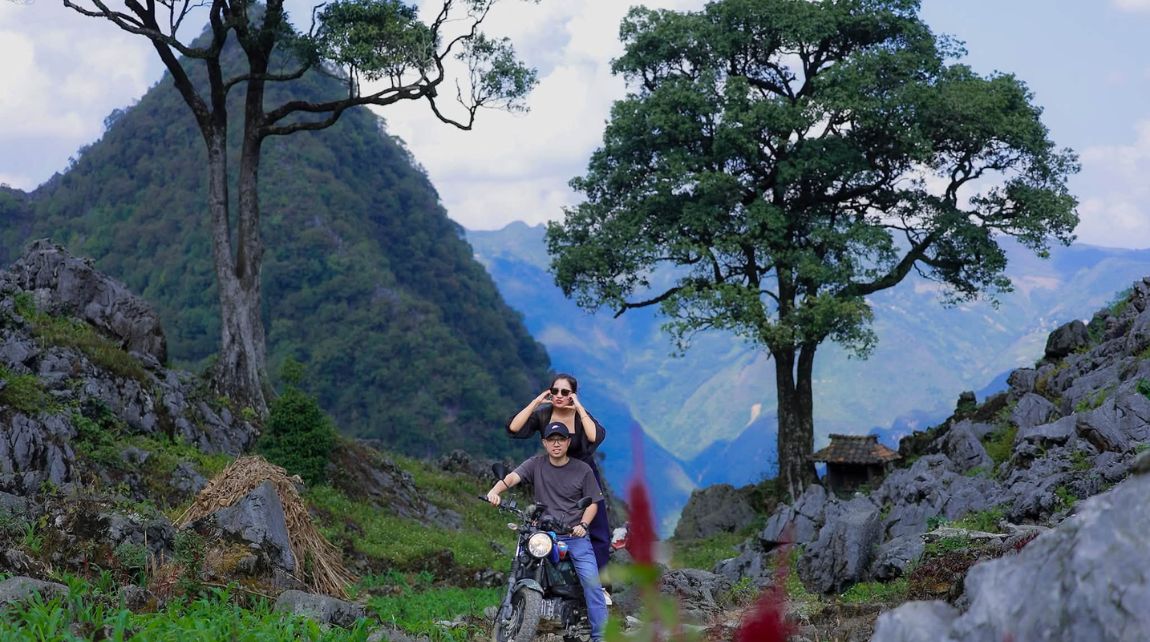
You may start the morning feeling cold, become warm during the afternoon and then need another layer after sunset.
Bring:
- T-shirts
- Long-sleeve shirts
- Lightweight sweater or fleece
- Light waterproof jacket
- Long trousers
- Comfortable walking shoes
- Warm layer for early mornings and high passes
- Sunglasses
- Sunscreen
- Insect repellent
- Reusable water bottle
- Power bank
- Personal medication
If you are riding a motorcycle, also bring:
- Gloves
- Closed shoes
- Buff or neck warmer
- Waterproof backpack cover
- Small dry bags for electronics
- Phone mount if riding independently
A waterproof jacket is worth packing even when the forecast looks favorable.
Mountain weather can change quickly, and getting caught in rain without protection can make a long riding day uncomfortable.
What to Eat in Ha Giang
Food is another way to experience the region.
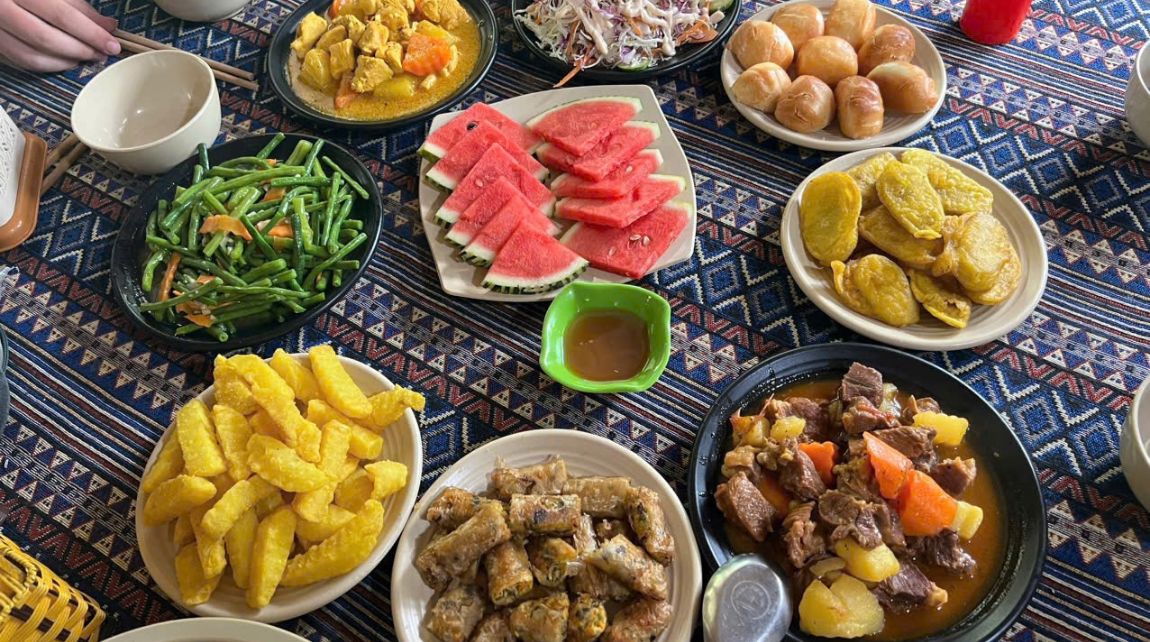
Ha Giang has a distinctive northern mountain food culture influenced by the many ethnic communities living across the province.
You may encounter:
Thang Co
A traditional dish associated with H'Mong communities.
It is particularly associated with markets and local food culture in the northern highlands.
Men Men
Men men is a traditional H'Mong dish made from steamed ground corn.
It is an important part of traditional food culture in the region.
Buckwheat Cakes
Buckwheat is not only a visual feature of Ha Giang's autumn landscape. The grain is also used in local foods, including cakes.
Banh Cuon
Steamed rice rolls are another popular breakfast option in northern Vietnam.
You will find local variations in towns along the Loop.
Local Homestay Meals
One of the most enjoyable food experiences can be dinner at a homestay.
Meals may include rice, vegetables, tofu, meat and locally prepared dishes served family-style.
The exact menu depends on the household and location.
Ha Giang in October: What Kind of Traveler Is It Best For?
Ha Giang is particularly suitable for travelers who enjoy landscapes, road trips, photography, outdoor experiences and cultural travel.
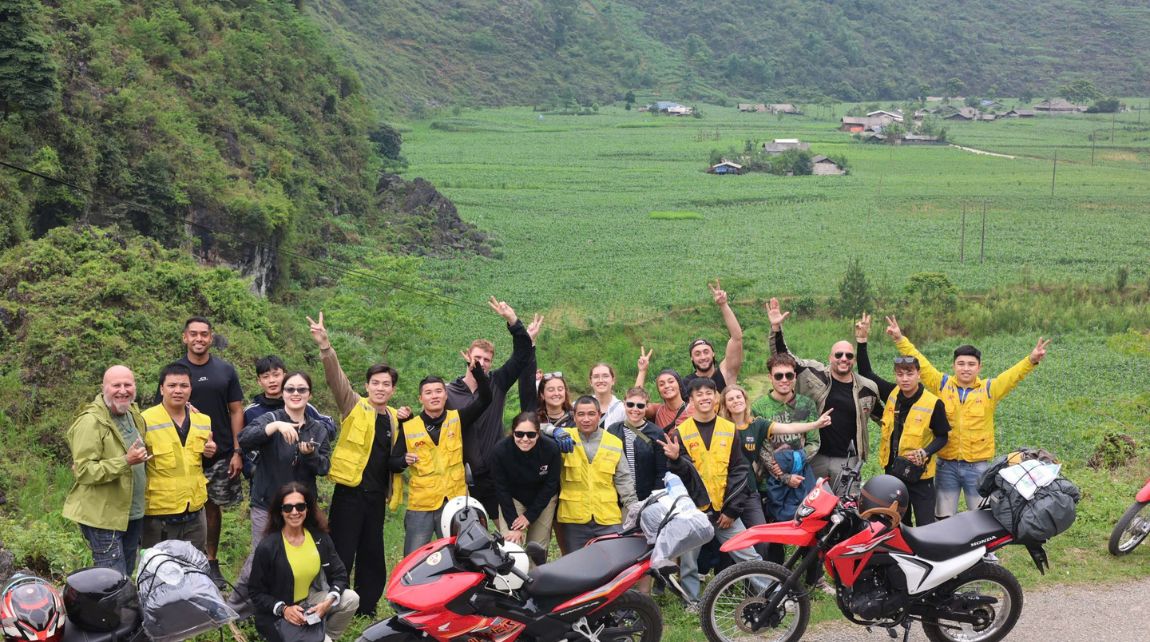
It may be a good fit if you want to:
- Spend several days away from major cities
- Explore mountain roads
- Photograph dramatic landscapes
- Stay in local homestays
- Visit villages
- Experience northern Vietnamese culture
- Travel at a slower pace
- Combine adventure with cultural experiences
It is less suitable if you are looking for a conventional beach holiday, nightlife or a highly structured city sightseeing experience.
The Ha Giang Loop is about the journey as much as the destinations.
Practical Tips for Visiting Ha Giang in October
Start Riding Early
Starting early gives you more daylight and more time for unexpected stops.
It also helps you avoid trying to complete difficult mountain sections after dark.
Avoid Riding After Dark
Mountain roads become considerably more difficult after sunset.
Poor visibility, sharp bends and unexpected obstacles make night riding particularly risky.
Plan your route around daylight.
Keep Your Schedule Flexible
Don't create an itinerary where every hour depends on arriving at a specific destination.
Rain, road conditions, traffic and photo stops can all affect your travel time.
Leave some flexibility.
Carry Cash
ATMs become less common once you travel deeper into the mountains.
Carry enough Vietnamese cash for food, accommodation and small purchases.
Download Offline Maps
Mobile coverage is not equally reliable everywhere in the mountains.
Download your route before leaving Ha Giang City.
Don't Overpack
You will be moving between accommodation almost every day.
A small backpack or soft bag is easier to carry than a large suitcase.
If you are joining an organized tour, ask whether the operator can store your larger luggage while you travel the Loop.
Leave Buffer Time Before Your Flight
If you need to fly internationally from Hanoi after your Ha Giang trip, don't plan your Loop to finish immediately before your flight.
Returning from the mountains can take longer than expected.
Leaving a buffer day in Hanoi gives you much more flexibility.
Ha Giang in October vs. November
October and November are both part of the autumn travel season, but the landscape changes between the two months.
October gives you a chance to combine the golden rice season with the beginning of buckwheat flower season.
November generally shifts further toward the cooler season and buckwheat flowers become a stronger feature of the landscape.
If you want rice terraces, early October is particularly relevant.
If you are primarily interested in buckwheat flowers, later October and November may be more appropriate.
Neither month guarantees a specific landscape on a particular day because agricultural cycles depend on location and yearly conditions.
How Much Does a Ha Giang Trip Cost?
The cost of visiting Ha Giang varies according to how you travel.
Your main expenses are likely to be:
- Transportation between Hanoi and Ha Giang
- Ha Giang Loop tour or motorbike rental
- Accommodation
- Food
- Fuel if riding independently
- Entrance fees where applicable
- Local activities
- Personal expenses
A self-guided trip can give you more control over individual spending, while an organized tour generally combines several costs into one package.
If you are comparing tours, don't look only at the headline price. Check what is included, such as transportation, accommodation, meals, motorcycle, Easy Rider, entrance fees and luggage storage.
Frequently Asked Questions About Ha Giang in October
Is October a good month to visit Ha Giang?
Yes. October offers cooler mountain conditions and seasonal landscapes including golden rice terraces and buckwheat flowers. Early October is more associated with rice harvest scenery, while buckwheat flowers become increasingly visible later in the month.
Is Ha Giang cold in October?
It can be cool, especially in the early morning, at night and at higher elevations around Dong Van and Ma Pi Leng. Lower areas can still feel warm during the day. Packing layers is the easiest way to handle the changing temperatures.
Does it rain in Ha Giang in October?
Rain is still possible, although historical climate data indicates that wet-day probability generally decreases through October. Because Ha Giang is mountainous, weather can vary significantly between locations. Bring a waterproof layer regardless of the forecast.
Can I see rice fields in Ha Giang in October?
Yes. Early October can still offer golden rice terraces, although harvesting happens at different times in different locations. Some fields may already have been harvested while others remain golden.
Are buckwheat flowers blooming in Ha Giang in October?
Buckwheat flowers generally begin appearing in late September and continue through October and November. Later October usually offers a better opportunity to see more developed flower fields, but exact timing varies from year to year.
Is the Ha Giang Loop safe for first-time riders?
The Loop includes steep, winding mountain roads and changing conditions. Travelers without genuine motorcycle experience should consider an Easy Rider or guided tour rather than using the Loop as a place to learn how to ride.
How many days should I spend on the Ha Giang Loop?
Three days and two nights is a practical option for the classic Loop. Four days and three nights gives you more time for villages, viewpoints, photography and cultural experiences without having to rush between destinations.
Can I do the Ha Giang Loop without riding a motorcycle?
Yes. An Easy Rider lets you experience the Loop as a passenger, while a guided tour can combine transportation, accommodation and local activities.
How do I get from Hanoi to Ha Giang?
You can travel from Hanoi to Ha Giang by sleeper bus, VIP minivan or private transfer. The journey is around 300 km and generally takes several hours depending on traffic and the type of vehicle.
Should I visit Ha Giang in early or late October?
Choose early October if golden rice terraces are your priority. Consider late October if you are more interested in buckwheat flowers and cooler mountain conditions. If you want a combination of both, the middle of the month can provide a useful balance, although seasonal conditions vary each year.
Final Thoughts: Ha Giang in October
Ha Giang in October brings together some of the region's most distinctive autumn experiences: golden rice terraces, emerging buckwheat flowers, cooler mountain weather and the spectacular roads of the Ha Giang Loop.
Early October is particularly interesting for rice terraces, while late October increasingly brings buckwheat flowers and cooler conditions in the northern highlands.
For a first visit, allow at least 3 days and 2 nights for the Loop. If you have more time, a 4-day itinerary gives you more freedom to stop at viewpoints, visit villages and enjoy the journey without rushing.
Whether you choose to ride yourself, travel with an Easy Rider or join a guided tour, the most important part of a Ha Giang trip is allowing enough time to experience the landscape rather than simply completing the route.
Ha Giang is best experienced slowly: stop when the mountains open up, spend time in the villages, talk to local people, and let the road become part of the destination.